
Working in an ICU requires a strong understanding of the specialized equipment used to monitor and treat critically ill patients. This environment is unique, characterized by high-alert medications and sophisticated equipment that demand management expertise.
This comprehensive ICU equipment list provides critical care nurses with an inclusive list of equipment commonly found in intensive care units (ICUs). I’ve categorized the equipment into logical sections to make finding what you need easier. It’s designed to empower you with the knowledge you need to excel in critical care settings.
It’s important to remember that protocols and procedures can differ between healthcare facilities. This information serves to enhance your understanding of patient care and should complement, rather than substitute for, your existing knowledge.

Table of Contents
Critical Care Unit Equipment
This extensive guide compiles essential equipment grouped by function for ease of search. Let’s jump in!
Airway/Breathing Equipment
Ventilators
Ventilators play a vital role in the ICU, providing mechanical breathing support for patients who can’t breathe well on their own. They regulate air pressure, oxygen levels, and breathing rates to meet the patient’s needs. This device is the most common one for nurses to use in the ICU.
- Attached to an endotracheal or tracheostomy tube, they deliver carefully programmed breaths and pressure levels to the lungs.
- Arterial blood gases (ABGs) are often tested to assess respiratory function. ABGs measure various parameters such as pH, oxygen and carbon dioxide levels, bicarbonate, lactate, and oxygen saturation, providing valuable insights into respiratory function.
- Patients on ventilators are called “intubated”, and removing ventilator support is called “extubation.”
- ICU nurses should learn about ventilator modes, watch for patient distress, and understand alarm signals.
- Developing a good relationship with the ICU respiratory therapist is invaluable for learning and support.
The Oscillator
- Primarily used for infants with severe respiratory issues.
- Can be used in rare cases for adults with influenza who don’t respond well to conventional ventilation. It’s not a common treatment for adults and is usually considered a last resort.
Positioning Equipment
Proning Devices
Proning is a medical procedure where a patient with severe respiratory problems is positioned on their stomach instead of their back (supine position). This technique helps improve oxygenation in critically ill patients.
- Proning is primarily used in patients with:
- Benefits of Proning:
- Proning Devices:
- Things to Consider with Proning:
Monitoring Devices
Ultrasound Machines
Ultrasound machines provide valuable insights into a patient’s anatomy, aiding in procedures, assessing fluid status, and guiding line placements.
- By emitting sound waves and capturing resulting images, they offer visual and audible feedback, assisting in determining blood flow.
- While they’re not utilized every shift, ultrasound machines are essential ICU equipment, serving various clinical needs beyond pregnancy assessments.
- Physicians, ultrasound technicians, and trained nurses operate these machines, ranging from basic to detailed scans.
- In the context of basic ultrasounds, nurses supporting physicians during procedures like central line placements should familiarize themselves with expected ultrasound results and normal parameters.
Tips for Nurses:
- Understand basic ultrasound techniques and indications.
- Collaborate with sonography for advanced scans like echocardiograms. While you might not conduct echocardiograms independently, be prepared to aid in procedures like bubble studies.
- Assist physicians during sterile procedures such as central and arterial line placements.
- Recognize normal ultrasound findings and when abnormalities arise. Learn about normal ejection fraction, standard transcranial doppler readings, among others.
ICU Bedside Patient Monitors
These devices are positioned above the patient’s hospital bed and provide constant monitoring of vital signs, both in the patient’s room and at the nurse’s station. They track various parameters such as heart rate, blood pressure (arterial and noninvasive), respiratory rate, and temperature.
The bedside monitor displays waveforms and numeric readings in different colors. Green is the typical default color for the EKG, the heart rate, the noninvasive blood pressure reading, oxygen saturation, and respiratory rate. Red is the default color for an arterial line, while blue is for CVP readings. Users have the option to customize the colors of different numbers or lines. Although preset colors are commonly used, they may be adjusted, especially when additional data points are added.
Waveforms: The first two waveforms show the heart’s electrical activity (heart rhythm) in two different leads. The third waveform is the arterial line waveform (if present) and the fourth waveform is the CVP waveform (if present). The fifth waveform is the pulse ox waveform with the last waveform being the respiratory waveform.
Numeric Readings: The numeric readings are alongside the right side of the monitor and can also be listed across the bottom depending on the brand of monitor and how many devices you are monitoring. The heart rate is the first numeric reading displayed in the upper right-hand corner. The next reading is the patient’s blood pressure values (SBP/DBP and MAP) – noninvasive is listed first, and invasive is listed second. Below the blood pressure readings are the oxygen saturation followed by respiratory rate.
Tips for ICU Nurses using Bedside Monitors:
- Customize alarm settings to match each patient’s needs and establish appropriate thresholds upon admission.
- Investigate and resolve inaccuracies in readings promptly to avoid alarm fatigue.
- Adjust alarm parameters based on the patient’s clinical condition to ensure timely response to changes in vital signs.

ICU Drips for Beginners
Drip Management for New Critical Care Nurses and Students
8825 students enrolled
Last updated May 26th, 2025
Arterial lines
A-lines are temporary devices used for continuous monitoring, typically in patients with compromised hemodynamics.
- Monitoring cuff pressures alongside A-line readings helps assess accuracy and anticipate cuff pressure variations post-removal.
- Unlike intermittent cuff measurements, A-lines provide more accurate arterial pressure readings. However, they should be removed as soon as possible to mitigate infection and injury risks.
- Ensure tight connections to prevent blood loss and maintain accurate readings. Proper leveling of the A-line is essential for accurate pressure measurement. When titrating drips based on A-line readings, accuracy is paramount.
- Patients and families should be aware of the importance of uninterrupted care during A-line management, as it directly affects medication administration and dosing.
Central Venous Pressure (CVP) Monitoring
It’s important to have a solid foundation in anatomy and physiology to grasp the placement and function of catheters. Central venous pressure (CVP), obtained through the use of a central line, assesses fluid volume status by measuring central venous pressure, typically located near the right atrium.
- Interpretation of CVP readings relies on recognizing trends rather than establishing a single normal value. It serves as a tool to monitor responses to therapy.
- While measuring fluid volume status can be complex, especially with various tools, it’s crucial to understand the purpose of using a CVP and view it as one of many available tools.
- Understanding the rationale behind using common monitoring devices such as CVP (Central Venous Pressure) and NICOM (Non-Invasive Cardiac Output Monitoring) is essential for effective utilization.
- CVP measurements can be obtained via central venous catheters (CVCs) or PA Catheters, each serving as part of a comprehensive monitoring strategy.
Cooling Devices
Familiarize yourself with terms like TTP (Targeted Temperature Management) and Hypothermia Protocol. Note the variety of brands and device types available.
- Cooling can be achieved using both external and internal devices, offering flexibility in patient care. To effectively utilize cooling devices while monitoring patients, it’s crucial to understand their operation and troubleshoot alarms promptly.
- Familiarize yourself with equipment functionality and troubleshoot connection and pressure issues when alarms occur, particularly concerning catheter placement.
- Cooling devices are specialized and may be predominantly used in specific situations like code-cool scenarios.
Non-invasive Cardiac Monitors
These devices offer external cardiac output monitoring, with options for leads on the chest wall and some utilizing A-Line data.
These monitors assess fluid volume status, cardiac output, index, and performance, providing valuable information for bedside nurses who manage the entire machine directly.
Wish Your 12-Hour Shift Had A Map?👇
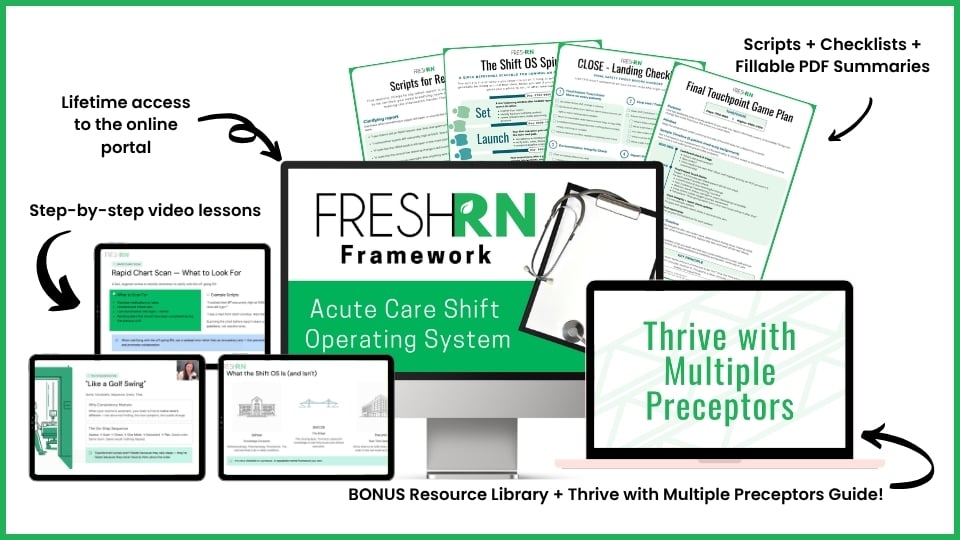
This course helps you turn a messy 12-hour acute care shift into a clear, structured rhythm. You’ll learn how to organize your day after report, prioritize when everything feels urgent, recover when something throws you off track, and give a stronger end-of-shift handoff. No fluff, no vague advice. Just a repeatable system you can use shift after shift. Designed specifically for med-surg, stepdown, and ICU nurses who are tired of feeling behind. No fluff. Just practical training you can use on your very next shift.
See What’s Inside Shift OS →
Temporary Internal Pacemakers
Internal pacing encompasses various devices designed to address cardiac rhythm abnormalities.
Temporary Pacemakers are used for individuals with compromised electrophysiology, particularly for life-threatening bradycardia.
- These devices are crucial for stabilizing patients until permanent pacemaker implantation and are typically inserted into the right internal jugular vein or the femoral vein.
- Patient positioning is critical for effective pacing, often requiring the patient to lie flat or at a slight incline.
- Bedside nurses typically monitor these devices, but they require specialized training due to their complexity.
- Caring for patients with pacemaker wires postoperatively is possible for you, even if you don’t have the training, with the proper support of the staff members.
Hemodialysis Machines
Hemodialysis machines serve as vital support for patients with kidney failure, filtering waste from the blood and maintaining electrolyte balance. Often known as “dialysis machines,” they are connected to patients via a specialized central line called a “dialysis catheter.”
- Two main types of hemodialysis machines exist: continuous renal replacement therapy (CRRT) and intermittent hemodialysis.
- While peritoneal dialysis (PD) is used primarily in pediatric patients, CRRT has proven more effective and has lower mortality rates in adults, particularly in ICU settings.
- Intermittent dialysis, typically performed by dialysis staff nurses in ICU rooms, may not suit all patients due to significant fluid shifts. CRRT, however, offers continuous treatment and is managed by ICU nurses after additional training. Early detection of dialysis necessity is crucial.
Nursing Tips for Hemodialysis Care:
- Vigilantly monitor for signs of hypotension and hypoglycemia.
- Familiarize yourself with the anticoagulation protocol for CRRT, monitoring parameters like activated partial thromboplastin time (aPTT) accordingly.
- Conduct frequent lab checks, including electrolytes and blood gases, and adjust CRRT parameters based on results.
- Be alert for potential complications such as circuit clotting, air embolism, or access site infections.
- Take measures to prevent hypothermia in CRRT patients by ensuring warmth due to exposure to room-temperature replacement fluids.
If you want to know the list of medications impacted by dialysis, click here.
Continuous Renal Replacement Therapy (CRRT)
Continuous Renal Replacement Therapy is a type of dialysis treatment for patients with acute or chronic renal failure.
- Unlike traditional hemodialysis (HD), which lasts 2-6 hours, CRRT is administered continuously over a 24-hour period at a slower rate. It’s gentler on the body.
- Mastering the specific machinery used for CRRT is crucial as each machine has its own troubleshooting and issues and the machine is dependent on the flow of the catheter.
- The treatment relies on a central venous catheter, so it’s essential to monitor for patency and signs of infection, treating it similarly to a central line.
- Regularly check if it’s sutured securely, and moving correctly, if there is pus coming out of the insertion site, and if the dressing is intact.
Points that differentiate hemodialysis catheters from CRRT:
- Patients on chronic dialysis may have different accesses, such as a fistula or Permacath, but CRRT isn’t possible with Permacath due to flow requirements.
- Unlike HD catheters, which use separate venous and arterial catheters, CRRT catheters have inflow and outflow ports, both placed in the vein.
Want to See How It All Comes Together in Practice?
If you’re ready to move beyond memorizing equipment and start connecting it to real patient care, check out this free lesson preview from Breakthrough ICU: our step-by-step course for new critical care nurses.
This preview comes from our module on Common Disease Processes and shows exactly how we make the complex, simple. 👇

Medication Administration Equipment
IV Pumps
Infusion pumps are essential devices that accurately deliver medications, fluids, and blood products, which are crucial for maintaining stable hemodynamics and administering life-saving treatments.
- Different brands such as Alaris, B. Braun, Maxter, and Medtronic operate uniquely and require specific training for proficiency. Mastering the operation of these pumps is vital for ICU expertise.
- Medications are administered from either IV bags or syringes, flowing through tubing at a programmed rate set by nurses. Syringe pumps are used when medications are dispensed from syringes.
- The specialized tubing of IV pumps delivers medications into the patient’s bloodstream, typically through a peripheral IV or central venous catheter.
Tips for ICU Nurses using IV Pumps:
- Verify settings thoroughly, especially when taking over care of a patient with ongoing medication infusion.
- Remain vigilant for any signs of infiltration.
- Ensure precise management of ICU drips.
- Always confirm compatibility before administering two medications through the same line.
- Always trace and label your lines, so you know what medications are infusing where.
To familiarize yourself with the list of frequently administered medications in the ICU through IV pumps click here.
💉 Need a quick IV refresher? Check out The IV Guy’s video course: ‘How to Insert Peripheral IV Catheters for Nurses‘.
Cardiac Support Equipment
Impellas and Intra Aortic Balloon Pumps (IABP)
The Impella Device is a percutaneous ventricular assist device designed to support the heart’s ejection fraction (EF).
- Following a cardiac event, when the heart experiences stunning and requires time to recover, the Impella device aids in this process without overworking the heart.
- It functions similarly to an IABP but provides assistance at a different stage of the cardiac cycle and offers distinct hemodynamic support.
- The Impella moves blood out of the left ventricle and into the patient’s aorta, effectively unloading the left ventricle.
- Impella provides a continuous flow of blood.
The Intra Aortic Balloon Pump, or IABP, functions as an augmentation device aimed at reducing afterload.
- Afterload relates to the systemic vascular resistance and represents the resistance against which the left ventricle of the heart pumps.
- The IABP inflates at the end of diastole, alleviating the heart’s workload slightly, and deflates prior to the heart contraction (systole).
- It serves as a temporary measure.
- The IABP provides a pulsatile flow of blood.
Similarities:
- Both are catheters inserted into the groin through a femoral artery, though on different sides.
- Both require similar external care: inspecting the insertion site, monitoring for infection, irritation, and bleeding, performing dressing changes, and neurovascular checks of the affected leg to ensure adequate pulses and perfusion.
- Both devices have troubleshooting protocols related to waveform analysis and pressure readings.
Additional considerations:
- Some patients with these devices can be awake. But they may need to remain lying flat due to groin catheter placement. It’s advisable to allow them to sit up slightly, around 20 or 30 degrees, as a best practice.
- Complications such as bleeding, hematomas, and pseudoaneurysms may arise from catheter presence with both of these devices.
- As a bedside nurse, it’s crucial to monitor your patient’s response to treatment closely. If their stability decreases, it’s essential to discuss it with the healthcare provider.
- Removal of these devices may occur at the bedside or by surgeons/ interventionalists, with potential risks of post-removal hypotension and bradycardia.
Important note regarding coagulation:
Never assume that just because a patient has a pump inserted, they will be anticoagulated within 24 or 48 hours. Treatment decisions vary among surgeons and cardiologists based on the patient’s comorbidities and disease process. Patients with coagulopathy or unstable bleeding patterns may not receive anticoagulation.
Defibrillators
Defibrillators serve as a critical intervention for life-threatening cardiac rhythms, delivering a controlled electric shock to restore normal heart rhythm by reading the patient’s electrical activity.
- They’re utilized during emergencies, with pads placed on the patient and energy levels selected based on the situation.
- Defibrillators not only deliver shocks but also provide cardiac monitoring during urgent situations, such as cardiac arrests.
- Unlike other common ICU equipment, defibrillators are not routinely attached to patients and are reserved for codes or specific cardiac scenarios.
- Defibrillators are typically located on the code cart.
Nursing Tips for Defibrillators:
- Ensure proper placement of pads.
- Ensure complete adherence of each pad to the patient’s chest.
- Double-check energy levels before delivery.
- Be prepared for potential adverse effects.
- Consider leaving pads in place for some time after stabilization.
- Observe how defibrillators are used before operating if new to the unit.
- Prioritize patient safety by ensuring no flammable materials are nearby, and everyone is clear before delivering a shock.
- If used for CPR, initiate chest compressions immediately following a shock, following BLS guidelines.
FreshRN Podcast Episodes About ICU Equipment
In this 👇 FreshRN Podcast episode, we discuss art lines, fluid monitoring device, and cooling device.
In Part 2, we discuss CRRT, HD, impellas and intra-aortic balloon pumps, internal pacing, proning devices, non-invasive cardiac monitors, and general advice to new ICU nurses.
More resources for ICU nurses
📝 FREE Nursing Report Mini-Master Class
- Common ICU Admission Diagnoses
- Common ICU Medications
- Sepsis Protocol for Nurses
- New ICU Nurse Master List – Meds, Procedures, Skills, Diagnostics, and More
- 6 Essential Tracheostomy Care Steps: A Comprehensive Guide
- Society of Critical Care Medicine
🎓 Want more? ICU Crash Course for Nurses 👇
This guide has equipped you with a comprehensive understanding of the essential equipment found in the ICU, empowering you to confidently navigate the challenges of critical care nursing.
Although we covered common ICU equipment, there are numerous other essential devices, like various feeding tubes (nasogastric, PEG, gastronomy), EKGs, chest tubes, tracheostomy tubes, diverse oxygen delivery devices, wound vacuums, and more, that are vital for comprehensive patient care in the intensive care setting.
Start Breakthrough ICU to learn more about those other devices. It’s a 6-week, online course tailored for new ICU nurses, empowering you to not just survive, but thrive in your role. With curated content and practical insights, increase your confidence and competence for every shift ahead.
By harnessing the power of these tools and devices, we can make a meaningful difference in the lives of our patients and their families. Together, let’s continue to uphold the highest standards of excellence in critical care nursing practice. You got this, nurse!
The ICU learning curve is STEEP. Let's make it easier.

Starting in the ICU can feel like drinking from a fire hose. The learning curve is real... but what if you had a head start?
Breakthrough ICU is designed just for new ICU nurses. You’ll get straight-to-the-point guidance on common ICU disease processes and treatments, equipment, report, and time management—so instead of playing catch-up, you’ll feel ready from day one.💪
Start Now!


0 Comments