
One of the most challenging parts of nursing, especially when you’re new, is building trust and rapport quickly with your patients and their support systems.
When patients trust you, they tend to unclench a bit and let you do your job. But when they’re unsure or wary, they naturally watch you more closely, ask more questions, and may even second-guess your actions. Honestly, can you blame them? If it were your loved one in the hospital bed, wouldn’t you want to know the nurse at the bedside was competent and compassionate?
But here’s the catch:
What if you’re a brand-new nurse who’s still figuring things out?
You Don’t Have to Know Everything to Build Trust
While you’re still getting comfortable with your skills, there is a way to begin building rapport—and it doesn’t require years of experience. One of the simplest (yet most powerful) ways to do this is by following through on something small right at the beginning of your shift.
Here are a few examples of what this can look like:
✅ Calling speech therapy to get a tentative time for the swallow evaluation they’ve been waiting on
✅ Saying you’ll grab a blanket and water after report—and actually doing it
✅ Telling them you’ll get printed info on a new med, then following through promptly
✅ Ordering their tray right there in the room, so they know it’s done
✅ Calling pharmacy in the room to check on a med so they can hear the conversation
These may seem like tiny, everyday tasks—but their impact can be huge.
They Don’t Know What You’re Juggling
Your patients and their families don’t know that you haven’t sat down in five hours. They don’t see that you’re managing four patients, two admissions, and a discharge. They didn’t witness the nurse before you calling pharmacy twice to track down that medication.
All they see is you—right now—and whether or not you follow through on your word.
Demonstrating reliability in these small, concrete ways early in your shift can increase their confidence in you. It tells them: You can trust me. I will do what I say I’m going to do.
And If You Drop the Ball—Own It
Mistakes happen. Priorities shift. Sometimes, despite your best intentions, you don’t get that blanket or make that call. Don’t avoid it. Instead, own it, apologize if needed, and move forward.
People can handle the truth, especially when they’re already in a scary and uncertain situation. They may not love the answer, but they’ll appreciate the honesty. It’s better to be trusted for telling the truth than liked for telling someone what they want to hear.
Until next time,
Kati 🪴

Don’t be intimidated! Follow these tips for working with physicians and banish your nursing anxiety for good.
Continue Reading Working With Physicians: 8 Tips Every New Nurse Should Know

People pleasing in nursing leads to perfectionism, burnout, and anxiety. Learn how to break the cycle and build a more confident, compassionate identity.
Continue Reading People Pleasing in Nursing: How Perfectionism Leads to Burnout
Wondering if your preceptor is just tough, or actually toxic? Here’s how to spot the red flags of bullying, protect your mental space, and navigate this tricky dynamic like a pro nurse (without losing your mind).
Continue Reading Is Your Preceptor a Bully? Here’s How to Tell and What to Do
If you have to write out goals for nursing evaluations during your performance review process, I go over a few great ideas and ways you can structure yours!
Continue Reading 32 Powerful Goals for Nursing Evaluations to Help You Succeed
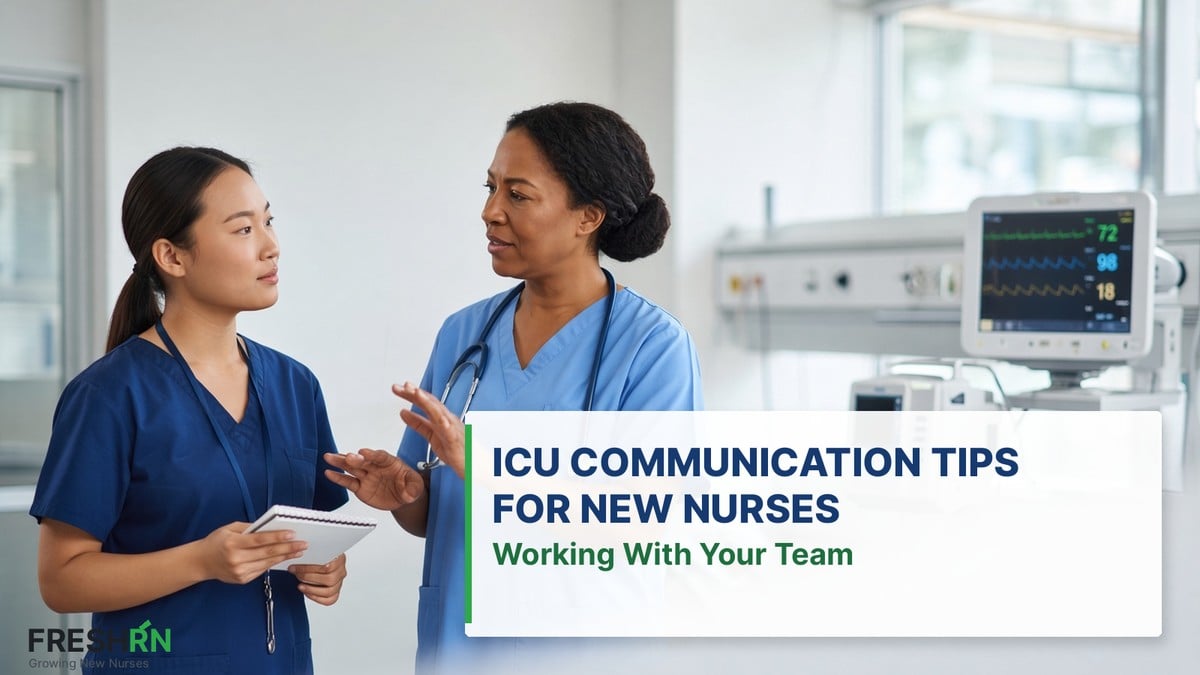
Practical ICU communication tips for new nurses: learn how to ask questions, speak up, and work with your team during your first months in critical care.
Continue Reading ICU Communication Tips for New Nurses: Working With Your Team

Cardiac nursing is very rewarding. Just when you think you’ve got it figured out, you’ll find something new. Let’s look at a Cardiac Nurse typical day.
Continue Reading Cardiac Nurse Responsibilities: A Typical Day on the Unit
Wish Your 12-Hour Shift Had A Map?👇
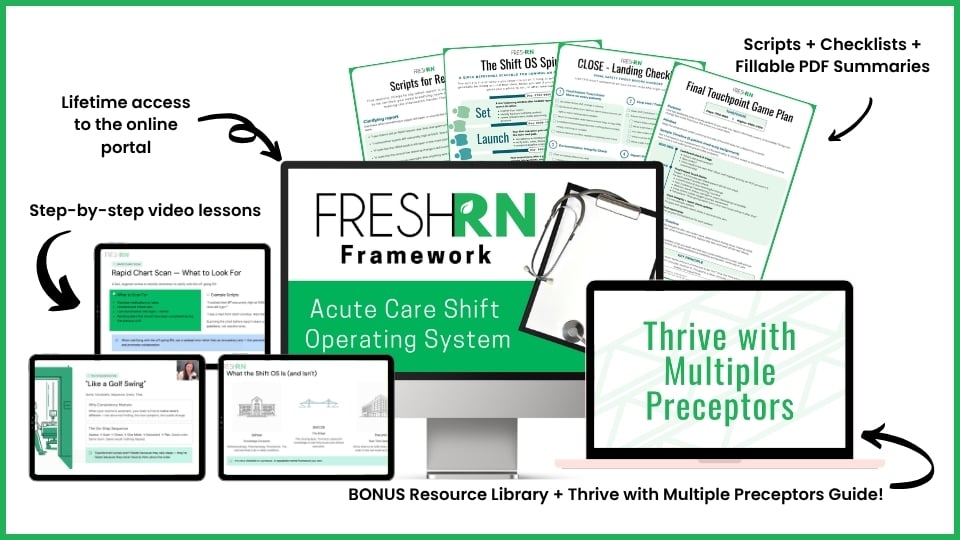
Turn a chaotic 12-hour acute care shift into a clear, structured rhythm. We cover: how to launch after report, prioritize when everything feels urgent, and finish with a clean handoff.
See What’s Inside Shift OS →

0 Comments