
Starting your first job as a neuro nurse? Let’s be real: neuro is one of the most intimidating specialties out there. The signs of deterioration are subtle, the pathophysiology is complex, and you’re suddenly expected to speak the same language as neurologists and neurosurgeons… often on day one.
If you’ve ever thought:
- “What if my patient starts declining and I miss it?”
- “What if the neurosurgeon asks me a question I can’t answer?”
- “What if I fumble through report and sound clueless?”
…you’re not alone. I’ve been there, and it’s exactly why we created our own crash course for new neuro nurses.

Table of Contents
🧠 Why neuro nursing feels so overwhelming
Neuro isn’t like other specialties. You’re not just managing vitals and meds, you’re interpreting subtle neuro assessments, monitoring labs like sodium that can make or break outcomes, and communicating those findings under pressure.
Add in high-stakes situations like code strokes, craniotomies, and organ procurement discussions, it’s no wonder new grads feel like they’re drowning before they’ve even found their footing.
The problem? Nursing school and the NCLEX barely scratch the surface. You walk into your first neuro job armed with theory, but not with the practical bedside knowledge you desperately need.
👀 What to look for in a New Neuro Nurse Review Course
Not every course is going to meet you where you are. A solid neuro refresher should:
✅ Teach you practical neuro assessments (not just theory) with video examples you can model at the bedside.
✅ Break down disease processes like brain bleeds, strokes, and spinal injuries in a way that actually makes sense.
✅ Focus on communication, so you know exactly how to give neuro report, call a provider, and explain things to families without freezing.
✅ Cover emergencies and equipment (EVDs, ICP monitors, craniotomies, etc.) so you aren’t blindsided in the middle of a shift.
✅ Keep it realistic. You don’t need a PhD-level lecture in neuro microanatomy, 😫 you need practical, bedside-ready info you can apply on your next shift. 😌
If a course is drowning you in unnecessary detail, skipping the real-world communication and workflow skills, or rehashing the same generic textbook info, you’ll end up right back where you started: overwhelmed.
🚫 What a neuro review course shouldn’t do
When you’re picking a new neuro nurse review course, it’s just as important to know what to avoid as what to look for. A solid course should cut through the noise and give you the bedside essentials—not bog you down with irrelevant or overwhelming info.
Skip any course that:
❌ Overloads you with neuro microanatomy you’ll never apply at the bedside (let’s save that for the neurology school textbooks).
❌ Rehashes generic nursing school theory without showing you how it looks in real neuro patient care.
❌ Focuses only on rare or obscure conditions instead of the top disease processes you’ll see daily (strokes, bleeds, seizures, etc.).
❌ Ignores communication skills: you need to know how to report neuro changes clearly to providers and explain them to families. This is an important skill set!
❌ Leaves out time management and shift flow, making it harder to keep up in the real-world chaos of neuro.
❌ Skips over equipment and procedures (like EVDs, craniotomies, or ICP monitoring) that you’ll absolutely encounter on the unit.
The best courses don’t just give you more facts, they give you clarity, confidence, and skills you can use tomorrow.
😣 Why we built Neuro Wise
When I started in neurocritical care back in 2012, I was terrified. I knew how to be a safe nurse, but I didn’t know the why behind my actions. I was scared of missing subtle signs, embarrassed to ask questions, and anxious every time a neurosurgeon rounded.
But with the help of incredible educators who poured into me, I learned how to:
- Catch decline early
- Communicate clearly and confidently
- Manage my time without drowning
- Actually understand the patho behind what I was doing
That’s what Neuro Wise is designed to give you: a structured, approachable way to go from nervous and overwhelmed to capable and confident.
✅ Inside Neuro Wise: here’s what you’ll learn
With 70+ modules of video, audio, and downloads, Neuro Wise walks you through everything a new neuro nurse needs, including:
- Neuro assessments (for conscious + unconscious patients) with video demos
- How to detect subtle neuro changes and communicate them like a pro
- The top 19+ neuro disease processes you’ll actually see at the bedside
- Common neuro procedures (thrombectomies, craniotomies, and more)
- Critical equipment like EVDs, Licox® catheters, and ICP monitoring
- Why sodium matters so much, and how to safely correct it
- Neuro emergencies and how to respond without panic
- How to give and take report like you’ve been doing it for years
- Organ donation and procurement, what’s really happening and your role as the nurse
You’ll also get:
- Sample CT scans to connect theory with reality
- Printable checklists and worksheets to bring to work
- Talking points for those “oh no” moments with providers and families
- Encouragement + insider tips from experienced neuro nurses who’ve been in your exact shoes
All with 16.0 contact hours approved by the California BON. Read our incredible reviews, and join over 1700 other nurses in Neuro Wise below! ⬇️

Neuro is a specialty that can feel intimidating at first. There’s a ton of new terminology, patient conditions can change fast, and neuro assessments are way more nuanced than they seem. It’s a lot to take in—but you don’t have to figure it out alone. Neuro Wise is the course we wish we had as new neuro nurses. It breaks down complex neuro concepts into easy-to-understand lessons, so you can confidently assess your patients, give a solid neuro report, and actually understand what’s going on—not just go through the motions. We cover everything you need to know—so you can step onto the unit feeling prepared, not panicked.
Start Lesson #1 Now
🩺 Not ready for the full deep dive yet?
If you’re still deciding or want a smaller first step, check out my FREE Conscious Neuro Assessments mini-course. I created this to help you master one of the most critical skills in neuro nursing.
You’ll learn:
- Step-by-step how to conduct a thorough neuro exam
- Why accurate neuro checks are so important for patient safety
- How to detect those subtle changes that can mean everything in neuro
Whether you’re still in nursing school, already on the floor, or just want to feel sharper with assessments, this free mini-course will help you build confidence fast.
➡️ Sign up below to grab instant access! ⬇️

Conscious Neuro Assessments: Tips for Nurses
Free 4-lesson mini-course walking you through how to complete a flawless bedside nurse conscious neuro exam!
1436 students enrolled
Last updated Apr 22nd, 2026
Final thoughts
The truth is, no one walks in knowing it all. Becoming a strong neuro nurse takes time, repetition, and the right tools.
You don’t have to figure it out alone. Whether you’re ready to dive into the full Neuro Wise course or just want to start small with our free neuro assessment mini-course, you’ve already taken the most important step: investing in your growth. 🌱
If neuro feels intimidating, that just means you care enough to get it right, and that’s exactly the kind of nurse patients and families need at the bedside.
💡 Want more encouragement and education? Check out more of our neuro resources here on FreshRN. From free articles and podcasts to more in-depth training, we’ve got your back as you grow into this specialty.
Don’t be intimidated! Follow these tips for working with physicians and banish your nursing anxiety for good.
Continue Reading Working With Physicians: 8 Tips Every New Nurse Should Know
People pleasing in nursing leads to perfectionism, burnout, and anxiety. Learn how to break the cycle and build a more confident, compassionate identity.
Continue Reading People Pleasing in Nursing: How Perfectionism Leads to Burnout
Wondering if your preceptor is just tough, or actually toxic? Here’s how to spot the red flags of bullying, protect your mental space, and navigate this tricky dynamic like a pro nurse (without losing your mind).
Continue Reading Is Your Preceptor a Bully? Here’s How to Tell and What to Do
If you have to write out goals for nursing evaluations during your performance review process, I go over a few great ideas and ways you can structure yours!
Continue Reading 32 Powerful Goals for Nursing Evaluations to Help You Succeed
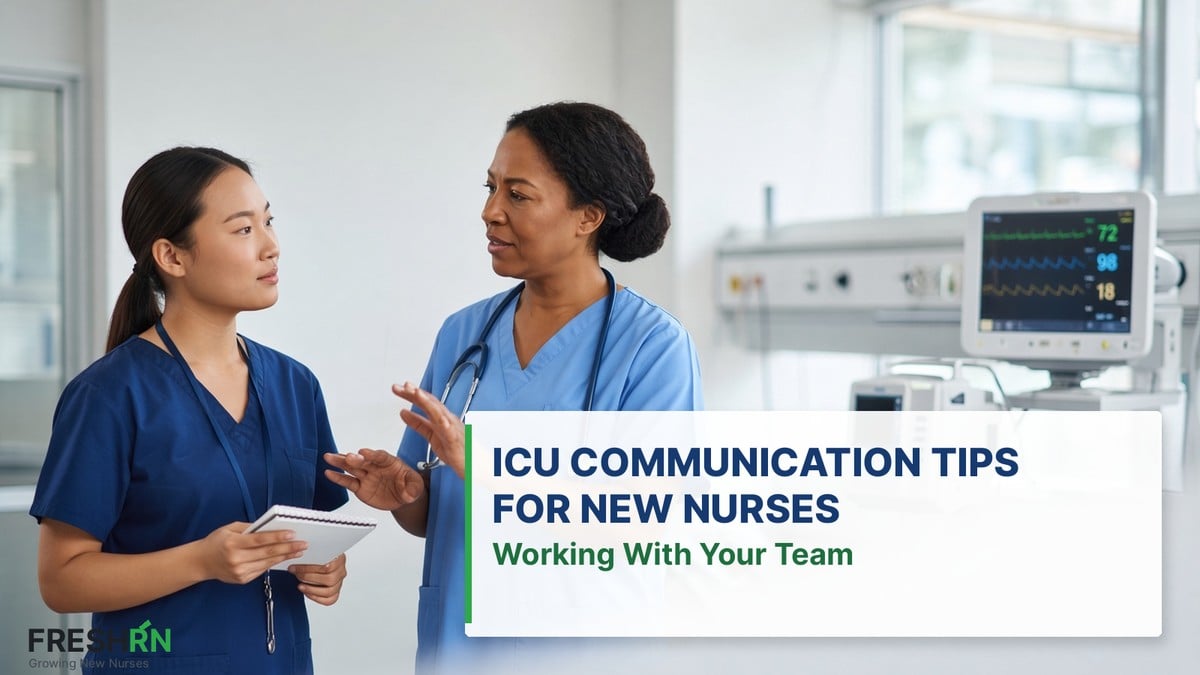
Practical ICU communication tips for new nurses: learn how to ask questions, speak up, and work with your team during your first months in critical care.
Continue Reading ICU Communication Tips for New Nurses: Working With Your Team

Cardiac nursing is very rewarding. Just when you think you’ve got it figured out, you’ll find something new. Let’s look at a Cardiac Nurse typical day.
Continue Reading Cardiac Nurse Responsibilities: A Typical Day on the Unit
0 Comments