
If you already have a bachelor’s degree and are thinking about pivoting into nursing, you don’t have to start from scratch. Accelerated BSN programs in Connecticut are designed for people just like you, students who’ve already invested time and energy in one field, but who now feel called to nursing.
These programs take the core nursing curriculum and condense it into an intense, fast-paced track. Instead of four years, you can complete your BSN in as little as 12-18 months and graduate ready to sit for the NCLEX. But before you jump in, let’s break down what these programs look like in Connecticut, what they cost, and how to know if they’re the right fit.
Table of Contents
Why choose an accelerated BSN in Connecticut?
Connecticut is home to several universities with strong reputations in healthcare education. Whether you’re near Hartford, New Haven, or the shoreline, you’ll find programs that blend classroom learning with hands-on clinical experiences in local hospitals.
Beyond the location, the appeal of an accelerated program is speed. These programs recognize the work you’ve already done in your first degree and focus only on the nursing-specific coursework. For motivated students, it’s one of the fastest ways to change careers and step into a role where you can make a difference at the bedside.
What accelerated BSN programs look like
Every program has its own quirks, but most accelerated BSNs in Connecticut share some key features:
- Length: Typically 12-18 months of full-time study.
- Format: A mix of classroom, lab, and clinical hours. Some schools offer hybrid learning, but clinicals are always in person.
- Intensity: Because the content is condensed, expect a demanding schedule. Most students find it’s not realistic to work while enrolled.
Think of it like a sprint: challenging, fast-moving, and all-consuming, but with a clear finish line that gets you into nursing quickly.
Accelerated BSN programs in Connecticut: A quick comparison
| School | Tuition (Approx.) | Program Length | Format | Notes |
|---|---|---|---|---|
| University of Connecticut (UConn) | ~$40,000 (in-state total) | 12 months | In-person | One of the fastest ABSN tracks in CT; Strong partnerships with Connecticut hospitals; large state university |
| Fairfield University | ~$55,000 | 15 months | Hybrid (online + in-person clinicals) | Jesuit university with strong reputation in New England |
| Quinnipiac University | ~$60,000 | 15 months | In-person | 84% NCLEX pass rate; highly intensive |
| Sacred Heart University | ~$54,000 | 15 months | In-person | Offers strong support services for second-degree students |
| University of Saint Joseph | ~$45,000 | 15 months | In-person | Smaller private school; known for close-knit learning environment |
Note: Tuition varies depending on transfer credits, fees, and whether you qualify for in-state tuition. Always confirm costs with the school’s admissions office before applying.
Admission requirements
Like other ABSN programs, Connecticut schools will want to see a prior bachelor’s degree, a solid GPA (3.0 and above), and a few prerequisite courses. Common prerequisites include anatomy, physiology, microbiology, chemistry, and statistics.
Most schools also ask for letters of recommendation and a personal statement explaining why you’re pursuing nursing now. This is your chance to connect the dots between your first career and the skills you’ll bring into nursing, whether that’s communication, leadership, organization, or empathy.
Costs + financial aid
The investment for accelerated BSN programs in Connecticut varies widely. Public universities tend to be more affordable, while private schools may carry a higher price tag. On average, expect tuition to fall between $30,000 and $60,000 for the entire program.
Financial aid is available though, even for second-degree students. Federal loans, scholarships, and sometimes employer reimbursement can help offset the cost. Some Connecticut hospitals may also offer tuition assistance if you commit to working with them after graduation.
💡 Smart Strategy: How to Pay for Your Nursing Degree
The most financially responsible way to pay for nursing school is to prioritize the lowest-cost options first and borrow only what you need:
- Start with free money – Max out scholarships and grants from your school or external sources. These don’t need to be repaid and directly reduce your total cost.
- Use personal savings or family contributions – Whether it’s savings you’ve set aside or a gift from a relative, this keeps your debt down.
- Use federal student loans next – These typically offer lower interest rates and more flexible repayment options than private loans.
- Only use private loans if needed – Once all other options are exhausted, borrow privately for the remaining gap.
If you do need private loans, don’t accept the first rate you see. Services like Juno use group buying power to negotiate lower interest rates for students, sometimes cutting rates by 1–4%. Signing up is free and doesn’t lock you into anything, but even a 1% difference can save you thousands over the life of your loan.
🎯 Bottom line: Minimize what you borrow, and make every dollar work smarter.
Is an accelerated BSN right for you?
This path isn’t for everyone. The pace is intense, and you’ll need to rearrange your life for at least a year. But for students who are motivated and ready for a career shift, the payoff can be huge. You’ll go from a completely different field to licensed RN in a fraction of the time, stepping into a career with stability, flexibility, and endless opportunities.
If you’re unsure, ask yourself: Do I thrive under pressure? Am I ready to treat school like a full-time job? Do I have the support system I need to handle a packed schedule? Honest answers will help you know whether this option fits your season of life and give you clarity in your decision. For more on figuring this out, check out this full post on accelerated BSN programs.
Final thoughts
Accelerated BSN programs in Connecticut open the door for career changers who don’t want to start over with four years of school. They honor the work you’ve already done in your first degree and channel it into a new path in nursing.
If nursing feels like the right next chapter for you, an accelerated program can help you make that pivot faster. It’s demanding, but it’s also deeply rewarding, and it could put you at the bedside helping patients in just over a year. 🌱
🧰 More Resources
- 💡 Still deciding if an accelerated path is right for you? Read these other posts:
- 📋 Want to organize your applications? Download our FREE Nursing School Planner to track deadlines, prerequisites, and tuition estimates in one place.
- 💰 Concerned about tuition? Explore Juno, a free service that helps students secure lower interest rates on loans by pooling borrowers together. Learn more here.

Don’t be intimidated! Follow these tips for working with physicians and banish your nursing anxiety for good.
Continue Reading Working With Physicians: 8 Tips Every New Nurse Should Know

People pleasing in nursing leads to perfectionism, burnout, and anxiety. Learn how to break the cycle and build a more confident, compassionate identity.
Continue Reading People Pleasing in Nursing: How Perfectionism Leads to Burnout

Wondering if your preceptor is just tough, or actually toxic? Here’s how to spot the red flags of bullying, protect your mental space, and navigate this tricky dynamic like a pro nurse (without losing your mind).
Continue Reading Is Your Preceptor a Bully? Here’s How to Tell and What to Do
If you have to write out goals for nursing evaluations during your performance review process, I go over a few great ideas and ways you can structure yours!
Continue Reading 32 Powerful Goals for Nursing Evaluations to Help You Succeed
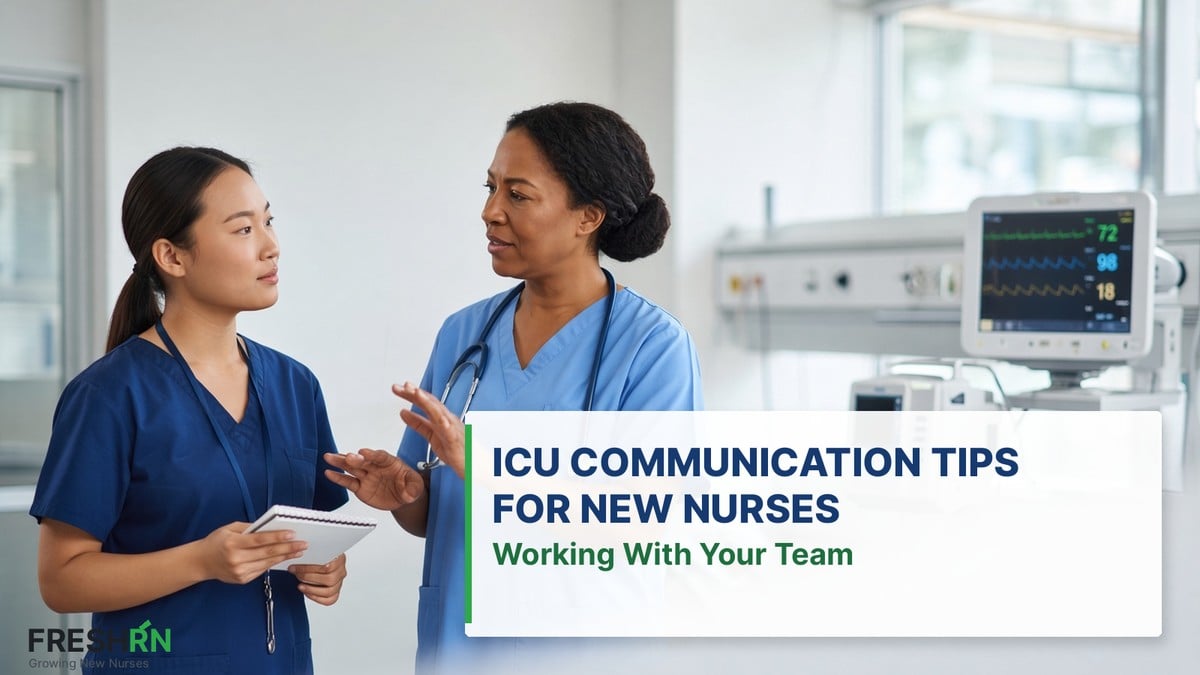
Practical ICU communication tips for new nurses: learn how to ask questions, speak up, and work with your team during your first months in critical care.
Continue Reading ICU Communication Tips for New Nurses: Working With Your Team

Cardiac nursing is very rewarding. Just when you think you’ve got it figured out, you’ll find something new. Let’s look at a Cardiac Nurse typical day.
Continue Reading Cardiac Nurse Responsibilities: A Typical Day on the Unit

Hello, I am the Admin Assistant to the Dean of Quinnipiac University’s School of Nursing. I noticed the information listed on your website regarding our ABSN program is inaccurate and wanted to see if it could be changed. Tuition for the ABSN program costs $60,620 per year. Could these this detail be updated on your website? Thank you for your help! -Chandler O’Reardon
Hi Chandler, thanks so much for providing that correction, it’s been updated!