
Starting your first job on a cardiac floor is equal parts exciting and terrifying. 💓 One minute you’re proud to have landed a spot in such a specialized unit, and the next you’re staring at your assignment list wondering, “What if my CABG patient crashes and I don’t know what to do?”
If you’re nodding along, you’re not alone. Cardiac patients are some of the most complex and high-stakes you’ll ever care for. Nursing school gives you the basics, but stepping onto the unit as a new grad (or even as a nurse changing specialties) is a completely different ball game.
That’s where the right cardiac review course can make all the difference. Let’s talk what that course should (and shouldn’t) cover, and my personal rec.
Table of Contents
Why a cardiac review course matters
Hearts are intimidating. The anatomy and physiology alone could and does fill textbooks, and once you add in interventions, surgeries, devices, and emergencies… it’s no wonder new cardiac nurses feel overwhelmed.
Put simply: A strong cardiac review course helps you bridge the gap between what you learned in school and what you need to actually do at the bedside. It should give you:
- A clear refresh of the must-know cardiac anatomy and pathophysiology
- Practical tools for responding to emergencies like a fib or code situations
- Straightforward breakdowns of procedures and surgeries you’ll be managing as the bedside nurse
- Communication strategies for talking with cardiologists, surgeons, and patients’ families
Bottom line: You don’t need to memorize every fact. It’s about learning what’s truly relevant so you can feel safe, confident, and competent.
👀 What to look for in a cardiac review course
When evaluating a cardiac review course, here’s what should be on your checklist:
✅ Focused Cardiac A&P Refresher – not every detail under the sun, but the anatomy and physiology you’ll rely on daily.
✅ Real-World Bedside Prep – how to respond when your patient flips into atrial fibrillation, what to expect after a cardiac catheterization, and how to manage common equipment like chest tubes and arterial lines.
✅ Step-by-Step Guidance on Surgeries & Procedures – from CABGs to valve replacements, you’ll want a course that walks you through what actually happens, your role, and how to explain it to patients.
✅ Emphasis on Communication & Confidence – because being able to confidently give report or talk to a cardiologist is just as important as knowing the patho.
🚫 What to Avoid in a Cardiac Review Course
When you’re shopping for a refresher, it’s just as important to know what not to waste your time on. Avoid courses that:
❌ Overload you with theory instead of showing you what matters at the bedside.
❌ Focus only on obscure conditions while ignoring the top diagnoses you’ll see daily.
❌ Skip practical bedside skills like how to give report, prep for procedures, or manage patient equipment.
❌ Ignore communication and teamwork, which are SO essential when working with cardiologists, surgeons, and anxious families.
❌ Drown you in technical detail that belongs in a fellowship program, not a new grad’s first week.
A good cardiac review course will keep you focused on what matters most now, not bury you in details you won’t use for years.
✅ Introducing Cardiac Confidence
That’s why I created Cardiac Confidence: A Crash Course for New Cardiac Nurses.
This isn’t a generic review, it’s a cardiac review course designed specifically for new cardiac nurses who want to stop feeling overwhelmed and start feeling competent. Inside, you’ll find:
- Cardiac Anatomy & Physiology Refresher – streamlined for what you’ll actually use on the floor.
- Cardiac Caths & Interventions – what happens in the cath lab, how to prep patients, and what to watch for afterward.
- Common Surgeries Explained – CABG, ABG, MVR/AVR, CEA, AAA, and many more, and how to educate the patient
- Responding to Emergencies – what to do when your patient flips into rapid afib or codes.
- Equipment Walkthroughs – chest tubes, trachs, arterial lines, and beyond.
- Bedside Communication – how to explain complex cardiac issues to patients and families with clarity and compassion.
You’ll also get:
- 30 videos (including skill videos and transcripts)
- Audio files for every module (listen to the course like a podcast!)
- A 180+ page PDF download of the entire course
- 11.0 nursing contact hours*
- Quizzes, worksheets, and extra downloads to reinforce learning
👉 Check out Cardiac Confidence here and join the 1400+ nurses inside! ⬇️

Cardiac nursing can feel like you're drowning in alarms, rhythms, and unfamiliar meds before you even get report, and you're expected to keep up. But here's the truth: you don’t need to know everything, you just need to know what matters most.
Cardiac Confidence was created by experienced nurses to help you cut through the noise. We cover what actually shows up in real life: like post-cath care, recognizing unstable rhythms, caring for chest tubes, and knowing when to escalate (and a lot more).
No fluff, no advanced cardiac stuff you don’t need yet. Just focused, foundational info that makes a big difference.
Start Lesson #1 Now
Not ready for a full cardiac review course?
That’s totally okay! If you’re not quite ready to commit to Cardiac Confidence, you can still start small.
One of the scariest moments for a new cardiac nurse is when a patient suddenly flips into afib with rapid ventricular response (RVR). 😳 It’s fast, it’s intimidating, and it can make you feel like you’re in way over your head.
That’s exactly why I created a free mini-course on Afib with RVR. In just a few short lessons, I’ll walk you through:
- What’s actually happening when a patient goes into afib with RVR
- What to watch for at the bedside
- How to respond quickly and effectively
- Key tips to help you manage it like a pro (without panic)
It’s 100% free, self-paced, and designed to help you face one of the most nerve-wracking cardiac scenarios with confidence. ⬇️ Click below to enroll in the free Afib with RVR mini-course now! ⬇️

Final Thoughts
Hearts are complex, but you don’t need to let them intimidate you. With the right cardiac review course, you can cut through the overwhelm and step into your first shifts with confidence.
Remember, every confident cardiac nurse you see on your unit once stood exactly where you are right now: nervous, overwhelmed, and wondering if they’d ever “get it.” The difference? They had the right tools and support to get there.
💡 You can too. Let Cardiac Confidence be your guide.
🧰 More resources for cardiac nurses
Here are a few more tools to support your journey:
- 📋 ECG Cheat Sheet – A FREE 14-page guide to help you learn to interpret ECGs
- 📊 ECG Rhythm Master – A focused ECG review course you can bundle with Cardiac Confidence.
- 💛 Nursing Report Basics – Free mini-course to help you give and receive report with confidence.

Don’t be intimidated! Follow these tips for working with physicians and banish your nursing anxiety for good.
Continue Reading Working With Physicians: 8 Tips Every New Nurse Should Know
People pleasing in nursing leads to perfectionism, burnout, and anxiety. Learn how to break the cycle and build a more confident, compassionate identity.
Continue Reading People Pleasing in Nursing: How Perfectionism Leads to Burnout
Wondering if your preceptor is just tough, or actually toxic? Here’s how to spot the red flags of bullying, protect your mental space, and navigate this tricky dynamic like a pro nurse (without losing your mind).
Continue Reading Is Your Preceptor a Bully? Here’s How to Tell and What to Do
If you have to write out goals for nursing evaluations during your performance review process, I go over a few great ideas and ways you can structure yours!
Continue Reading 32 Powerful Goals for Nursing Evaluations to Help You Succeed
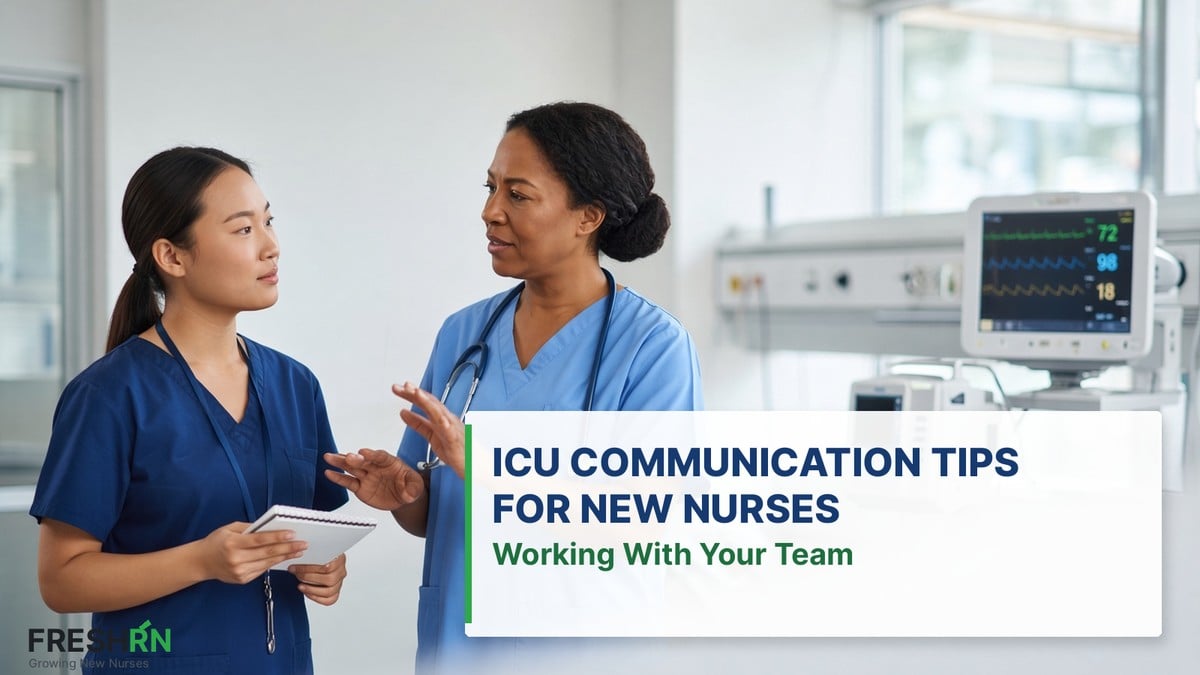
Practical ICU communication tips for new nurses: learn how to ask questions, speak up, and work with your team during your first months in critical care.
Continue Reading ICU Communication Tips for New Nurses: Working With Your Team

Cardiac nursing is very rewarding. Just when you think you’ve got it figured out, you’ll find something new. Let’s look at a Cardiac Nurse typical day.
Continue Reading Cardiac Nurse Responsibilities: A Typical Day on the Unit

0 Comments