
Ask any nurse how they feel about floating, and you’ll usually get one of two answers:
✨ “I love it!” or 😬 “Please no, I’ll take literally any other assignment.”
For me in those early years? Floating fell squarely in the please no category.
I felt like I was barely getting my feet under me on my home unit, and then suddenly, boom, different layout, different processes, different patient population. Not exactly confidence-boosting.
But apparently not everyone dreads floating. Some nurses actually love it so much they join the float pool on purpose. And when I shared my own floating frustrations in an email a while back, one highly experienced float nurse wrote back with the most practical, game-changing advice I’ve ever seen on the topic.
Her advice was absolute GOLD. Like, you know when you’re in a class, seminar, lecture, etc. and suddenly what they’re saying is incredibly relevant and helpful, so you start taking notes as fast as humanly possible? That.
So, if you’re nervous about floating, (or if you’ve been voluntold to cover another unit and your stomach drops) here’s what an experienced float nurse says will help you not just survive, but actually thrive. (These are pulled from her full post on floating tips here!)
🛠 1. Know what you need to feel comfortable
The four walls of your unit are a flexible concept / it’s all in how you choose to look at it. So before you even start your shift, ask these questions to make sure you’re comfortable:
- Where can I safely store my stuff? (purse/backpack, etc. so it won’t get stolen)
- Where’s the bathroom? (personal needs take priority)
- Where’s the break room, and how do breaks work here?
- Who’s my go-to person if I have questions? (identify them upfront)
- Where’s the code blue button and crash cart? What’s my role in a code here?
- How is report done, recorded or in-person?
- Where’s the supply room? Dirty utility?
- Do they do bedside report?
- How long is this shift? (4,8,10 or 12)
- Who will relieve me at the end of my shift?
- Will I be floated again during the shift? (yes, it happens)
- Is there a shuttle I need to catch to go to my car if it is parked on the other campus/home, and if so what’s its schedule?
This sets the tone early that you’re engaged, professional, and ready to work (plus it saves you scrambling mid-shift for basic info).
🧭 2. Orient yourself quickly
Every unit has its quirks, but most layouts have similar logic. Take five minutes to walk the halls, locate key areas, and get your bearings. Feeling physically grounded helps you feel mentally grounded too.
🙌 3. Fall back on the basics
You’re still a nurse, so your core skills travel with you! You already know how to assess a patient, how to chart, when to escalate, etc. So do the tasks you already know how to do. And then ask questions about the tasks you’re not sure about.
If you’re unsure about a unit-specific process (like whether CNAs there do blood sugars), ask the charge nurse. (And find the “old dogs” on the unit… they know everything.)
🛑 4. Speak up if something’s outside of your scope
If you’re floated to a unit or given an assignment that feels outside your comfort zone, speak up (early and clearly). You are absolutely allowed to say:
“This is outside my scope of practice. I haven’t taken care of [this type of patient] before.”
You can refuse an assignment if you don’t feel you can practice safely. You have a right to practice safe patient care and not be just a body thrown at a staffing shortage. Don’t let them bully you and put you or your patients at risk. (That’s when accidents happen).
Remember: it’s your license, and you’re the one responsible for the care you provide. As a nurse with 35+ years of experience (and plenty of floated shifts under my belt), I’m telling you, practice safely with your scope, and don’t let anyone force you to do otherwise!
💡 Final thought from the float pro
“Resilience develops over time and our expertise didn’t just happen suddenly. (We have to be willing and open to learning and gaining new experiences – this is how we grow as nurses. Everybody was a novice at first).
Don’t be overly critical of yourself. You have more in your nursing bag of tricks than you give yourself credit for, and bring keen and different insights and perspectives with you.”
Floating might never be your favorite thing, but with the right mindset and a game plan, it doesn’t have to be miserable. I hope these tips helped! Who knows, you might even end up in the “I love it!” camp someday.
P.S. Want to feel ready for any unit?
If you ever float to med-surg, ortho, cardiac, ICU, or neuro, we’ve got self-paced courses to help you brush up fast, so you can walk in feeling confident. Check them out here.
Until next time,
Kati 🪴

Don’t be intimidated! Follow these tips for working with physicians and banish your nursing anxiety for good.
Continue Reading Working With Physicians: 8 Tips Every New Nurse Should Know

People pleasing in nursing leads to perfectionism, burnout, and anxiety. Learn how to break the cycle and build a more confident, compassionate identity.
Continue Reading People Pleasing in Nursing: How Perfectionism Leads to Burnout
Wondering if your preceptor is just tough, or actually toxic? Here’s how to spot the red flags of bullying, protect your mental space, and navigate this tricky dynamic like a pro nurse (without losing your mind).
Continue Reading Is Your Preceptor a Bully? Here’s How to Tell and What to Do

If you have to write out goals for nursing evaluations during your performance review process, I go over a few great ideas and ways you can structure yours!
Continue Reading 32 Powerful Goals for Nursing Evaluations to Help You Succeed
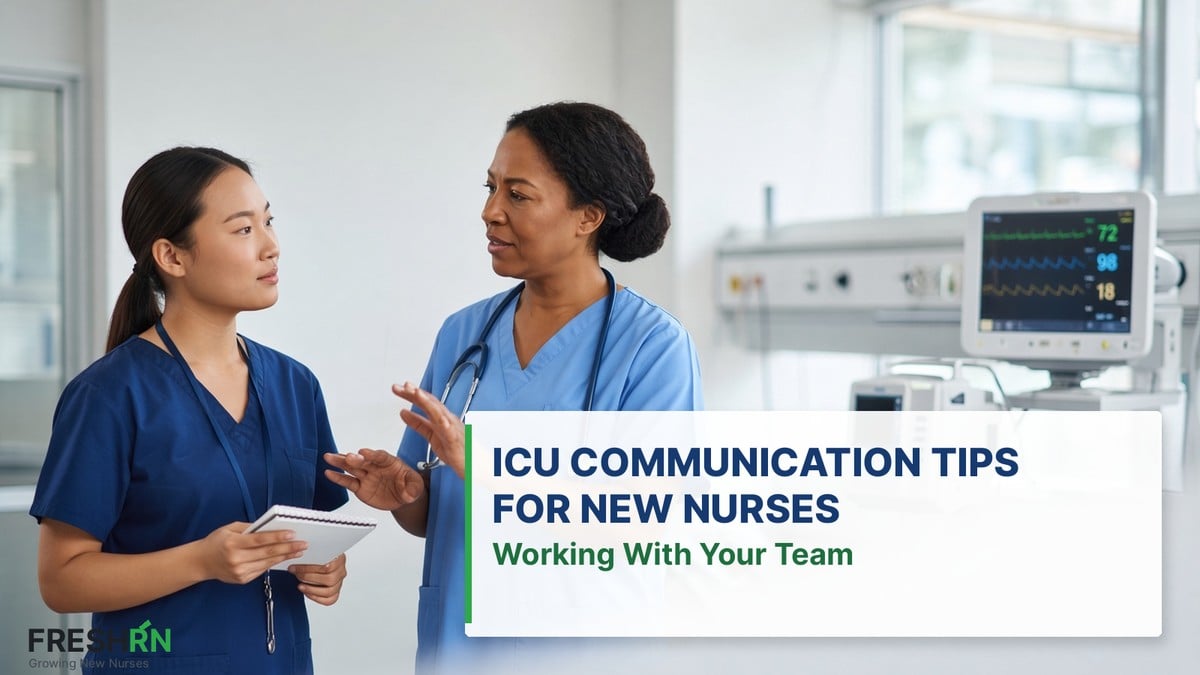
Practical ICU communication tips for new nurses: learn how to ask questions, speak up, and work with your team during your first months in critical care.
Continue Reading ICU Communication Tips for New Nurses: Working With Your Team

Cardiac nursing is very rewarding. Just when you think you’ve got it figured out, you’ll find something new. Let’s look at a Cardiac Nurse typical day.
Continue Reading Cardiac Nurse Responsibilities: A Typical Day on the Unit
Wish Your 12-Hour Shift Had A Map?👇
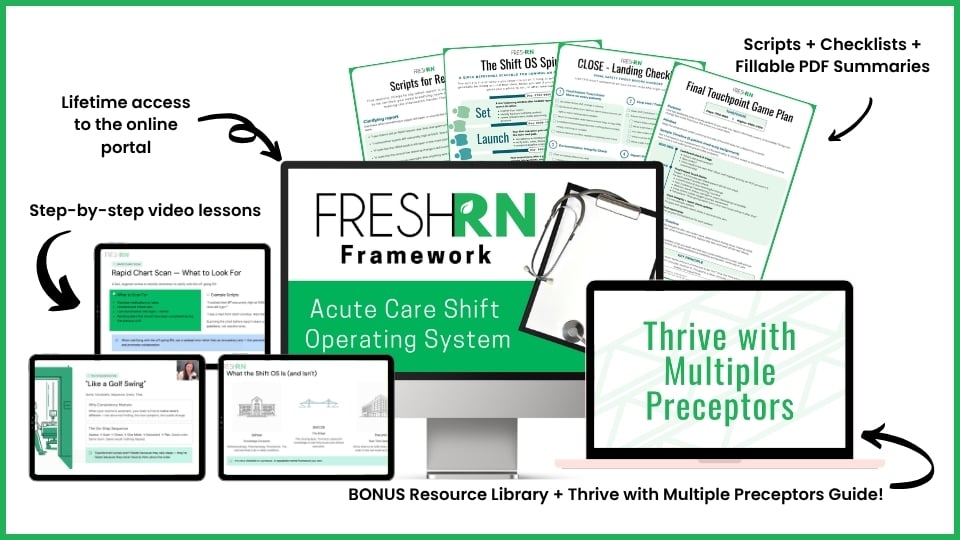
Turn a chaotic 12-hour acute care shift into a clear, structured rhythm. We cover: how to launch after report, prioritize when everything feels urgent, and finish with a clean handoff.
See What’s Inside Shift OS →

0 Comments