
If you’ve ever found yourself fixing the charting system for your whole unit, or dreaming up ways to make documentation less of a time-suck, informatics and nursing might be your perfect match.
Nursing informatics blends tech, clinical expertise, and systems thinking. It’s a specialty that often flies under the radar, but it plays a huge role in how healthcare systems operate behind the scenes. And in an age where AI and digital tools are growing fast, nurses in this space are more in demand than ever.
Let’s break down what this role actually looks like, and how to get there.

Table of Contents
What is an Informatics Nurse?
An informatics nurse is a licensed RN who combines clinical nursing knowledge with skills in data, technology, and systems to improve patient care and healthcare workflows.
While you won’t be at the bedside in this role, you will be supporting the nurses and providers who are. Informatics nurses are often the bridge between IT teams, clinical staff, and healthcare leadership.
You’ll hear this role called several things: informatics RN, nursing informaticist, or nurse informatics specialist. But they all involve the same core idea: using data to make care safer, smarter, and more efficient.
What Do Informatics Nurses Actually Do?
If you’re wondering, ‘what do informatics nurses do?’, it varies depending on the setting. But here are some of the most common day-to-day tasks:
- Supporting and improving electronic health record (EHR) systems
- Translating clinical needs to tech teams (and vice versa)
- Training staff on new charting tools and digital platforms
- Analyzing patient data trends to improve outcomes
- Creating more efficient documentation workflows
- Helping ensure compliance with safety and privacy standards
They’re kind of like clinical process detectives, always asking, How can this be better? Safer? Simpler?
Some informatics nurses focus more on training and education, while others dive deep into data analytics, policy design, or technology implementation. This is a great role for nurses who love systems, details, and solving problems on a bigger scale. (More on this in a bit!)
Where Do Informatics Nurses Work?
Informatics nurses are found in all kinds of settings, not just hospitals. You might see them in:
- Large hospital systems or academic medical centers
- Public health departments
- Health tech companies and EHR vendors
- Government agencies (like the CDC or VA)
- Universities and nursing schools
- Consulting firms or private practice groups
Because they’re so connected to healthcare infrastructure, they often hold hybrid or remote positions, with occasional travel for training or implementation projects.
You can also go into business for yourself! Many informatics nurses become independent consultants, working with hospitals, startups, or nursing education companies to optimize clinical systems or train staff on new tech tools. You could even start your own business as the “go-to” tech expert for a nursing brand or company, developing the tech side of digital products, managing data systems, or helping the business streamline their workflow with custom tools.
If you’ve got that mix of clinical knowledge, tech-savviness, and entrepreneurial spirit, the sky’s the limit.
Is Nursing Informatics Right for You? Traits That Thrive in This Role
Not every nurse wants to work at the bedside forever, and that’s more than okay. If you’re curious about nursing informatics but unsure whether you’d be a good fit, here are a few traits and strengths that tend to thrive in this specialty:
🧩 You love problem-solving and systems thinking
Informatics nurses are natural puzzle-solvers. If you’re someone who enjoys figuring out how things work (and how they can work better) you’ll probably enjoy this role. You’ll spend a lot of time thinking about workflows, system design, and how to improve processes for both patients and providers.
💬 You’re a strong communicator (especially between teams)
Informatics RNs often serve as the bridge between clinical staff and IT. If you’re good at translating “tech speak” into nurse speak (and vice versa) you’re already ahead. You’ll need to explain how tech changes impact practice, gather feedback from staff, and help implement new tools.
💻 You’re not afraid of technology (even if you’re not a programmer)
You don’t need to know how to code to be successful in nursing informatics, but you do need to be comfortable learning new systems, platforms, and tools. If you find yourself getting excited (not overwhelmed) when learning a new EMR feature, that’s a good sign.
🧘♀️ You’re detail-oriented but patient
A lot of informatics work happens behind the scenes. It takes time to build, test, and roll out changes in a safe and effective way. If you’re someone who can zoom in on the details without getting lost in the weeds (and stay patient with the process) you’ll likely thrive here.
👥 You care about the user experience
Nursing informatics isn’t just about tech, it’s also about people. You’ll be thinking constantly about how nurses, patients, and other providers interact with systems. If you’re the kind of nurse who’s always suggesting ways to make the charting flow better or reduce clicks, this role might feel like a natural next step.
Informatics, AI, and the Future of Healthcare
We recently talked to Ali Morin, MSN, RN-BC, CNIO, who’s the Chief Nursing Informatics Officer at Symplr (a tech company focused on making nurses’ lives easier; yes, please 🙌).
And we chatted about how AI is transforming nursing in general, and it’s making big waves in informatics too. (🎧 You can listen to that podcast below, or read the full AI in Nursing blog post here.)
With AI tools being built into EHRs and decision support systems, informatics nurses are key players in:
- Making sure AI integrates safely and ethically
- Helping clinicians use new tools without adding more charting burden
- Training nurses on new tech while keeping the focus on patient care
- Advocating for smart, human-centered design
As AI grows, the need for informatics nurses to manage that evolution is only going to increase. This is a specialty that’s future-proof, flexible, and deeply impactful.
Want to hear how Ali got into informatics and what she sees coming next for the profession? Listen to the full conversation here 👇
👩💻 How to Become an Informatics Nurse
If you’re interested in making the switch to informatics and nursing, here’s how it typically works:
1. Get Experience as a Nurse
Most programs and employers want you to have a solid clinical foundation first. That means at least 2 years of bedside or unit experience is ideal.
2. Pursue an Informatics-Focused MSN or Certificate
You can either:
- Complete a full MSN in Nursing Informatics, or
- Add a post-master’s certificate in informatics if you already have an MSN or DNP
🎓 There are many online programs designed for working nurses. Some may even include partnerships with hospitals for real-world project experience. If you’re ready to compare and find online nursing informatics degrees, you can use our partner’s tool below to browse nursing informatics program options near you ⬇️
3. Get Certified (Optional but Helpful)
The ANCC Informatics Nursing Certification (NI-BC) is the gold standard. To qualify, you’ll need:
- A current, active RN license
- A bachelor’s or higher degree
- 2 years of RN experience
- 30 hours of informatics CEs + practice hours (practice hour reqs are detailed on the ANCC website linked above)
This step isn’t required for every job, but it can definitely boost your credentials and confidence.
Final Thoughts: This Role Is More Than “Techy Nurse”
If you love the idea of optimizing systems, solving problems, and making a wide-reaching impact without staying at the bedside forever, informatics and nursing might be your next best step. This isn’t about trading patient care for screen time, it’s about empowering care teams, improving outcomes, and building systems that truly support nurses and patients alike.
🧰 More Resources for the Future Informatics RN
😎 Wanna hear from a nurse who’s already doing this? Check out our chat with Ali Morin, who’s the Chief Nursing Informatics Officer at Symplr. We talk all about how AI is already shaping bedside care, and more.
🎓 Thinking about going the post-master’s certificate route for nursing informatics? This post breaks down how those programs work, and how they can help you specialize without starting from scratch.
💻 Want to find accredited informatics degree programs? Use the tool below to find online programs near you ⬇️
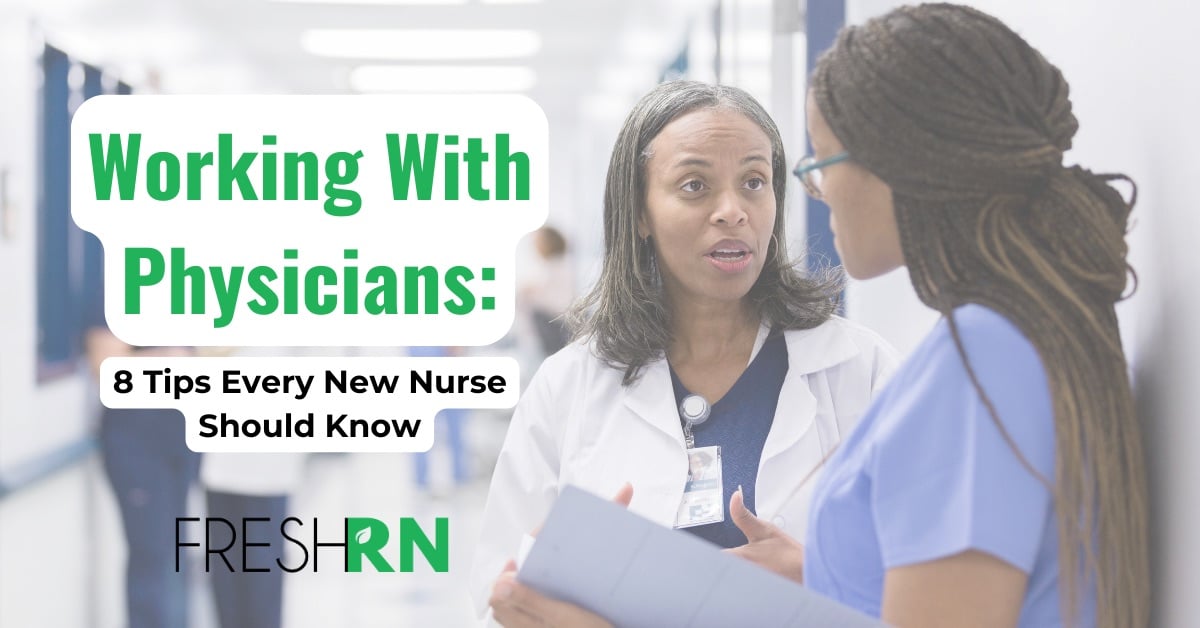
Don’t be intimidated! Follow these tips for working with physicians and banish your nursing anxiety for good.
Continue Reading Working With Physicians: 8 Tips Every New Nurse Should Know

People pleasing in nursing leads to perfectionism, burnout, and anxiety. Learn how to break the cycle and build a more confident, compassionate identity.
Continue Reading People Pleasing in Nursing: How Perfectionism Leads to Burnout

Wondering if your preceptor is just tough, or actually toxic? Here’s how to spot the red flags of bullying, protect your mental space, and navigate this tricky dynamic like a pro nurse (without losing your mind).
Continue Reading Is Your Preceptor a Bully? Here’s How to Tell and What to Do
If you have to write out goals for nursing evaluations during your performance review process, I go over a few great ideas and ways you can structure yours!
Continue Reading 32 Powerful Goals for Nursing Evaluations to Help You Succeed
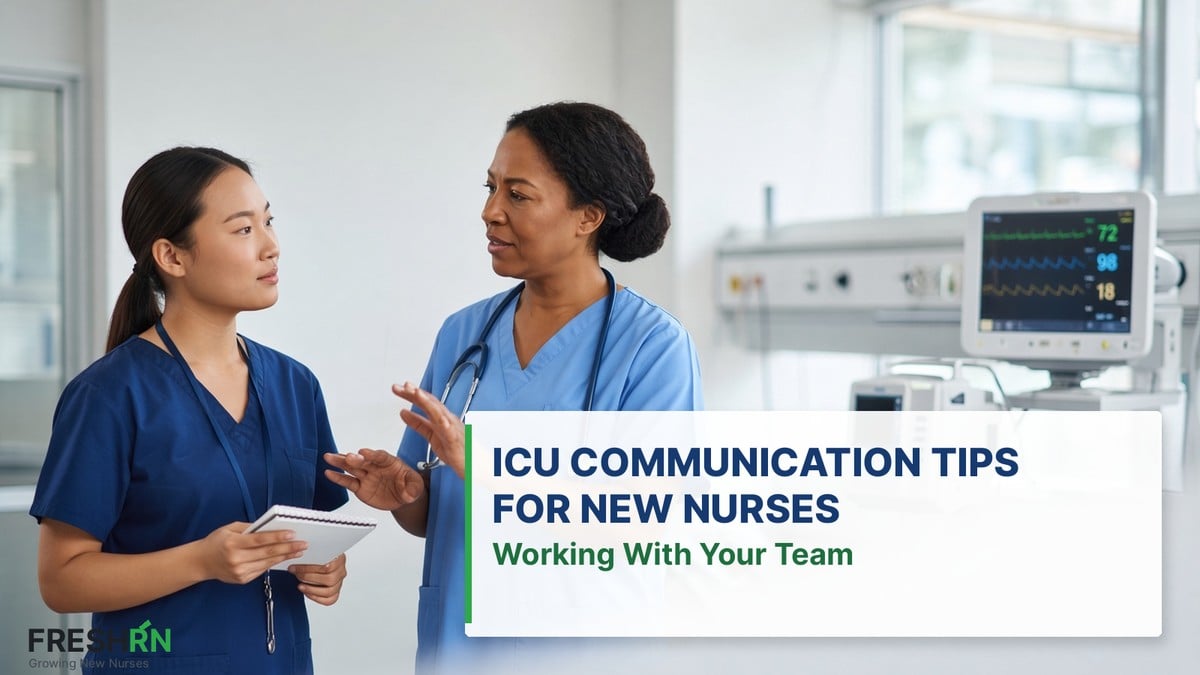
Practical ICU communication tips for new nurses: learn how to ask questions, speak up, and work with your team during your first months in critical care.
Continue Reading ICU Communication Tips for New Nurses: Working With Your Team

Cardiac nursing is very rewarding. Just when you think you’ve got it figured out, you’ll find something new. Let’s look at a Cardiac Nurse typical day.
Continue Reading Cardiac Nurse Responsibilities: A Typical Day on the Unit

0 Comments