
A great preceptor can build your confidence and help you thrive in those first overwhelming weeks. But a toxic one? They can make you question your career choice altogether. 😣
I was fortunate enough to have very positive experiences, but I know many are not so lucky. Some preceptors are simply overbearing or disengaged, but sometimes, their behavior crosses a line into something more harmful: bullying. And sometimes it can be hard to tell if that’s what it really is.
And maybe you can’t quite put your finger on it, but something just doesn’t feel right. If you’re feeling anxious, confused, or defeated every time you’re around your preceptor, it’s definitely worth digging a little deeper.
Bullying from a Preceptor Might Look Like… 🚩
Here are a few red flags that may indicate your preceptor is crossing from tough love into unhealthy behavior:
- Speaking down to you: “Wow, even a nursing student would know that.”
- Micromanaging everything you do: “No, don’t do it like that, just let me do it, clearly you’re not ready.”
- Acting kind to your face but you overhear them talking about you negatively behind your back: “She’s nice enough, but I really don’t know how she made it through nursing school.”
- They treat teaching you as a burden or chore: “Ugh, I don’t have time to babysit today.”
- Ignoring your requests for help or clarification: [Silence followed by walking away or responding with] “Figure it out, this isn’t school anymore.”
- Setting you up to fail: “Yeah, go ahead and hang that drip, what could go wrong?”
- They are literally taking your things: “Oh, was that your lunch? Too late.”
- Sabotaging your learning opportunities: “You’re on bed baths all shift (again). I’ll handle the admits.”
- Leaving the unit for extended times without telling you: “If you need me, too bad, I’m on break.”
- Talking over you in front of patients or providers: “Actually, what she meant to say was…”
- Giving destructive (not constructive) criticism: “That was pathetic. Don’t ever do it like that again.”
- Changing expectations constantly and criticizing you when you’re confused: “What do you mean you thought you only had two patients today? This is real life.”
- Publicly embarrassing or mocking you: “Seriously? You don’t know the normal potassium range? Yikes.”
- Showing blatant favoritism to other new nurses on the unit: “Oh, I’ll show her how to do it, she actually gets it.”
- Using body language like eye rolls, sighs, or ignoring your questions: [Heavy sigh] “Are you seriously asking me that again?”
If any of that sounds familiar, please hear this: it’s not okay. Becoming a nurse is hard enough on its own without adding all the negativity. You deserve a supportive learning environment. Period.
It’s Not You, It’s Them
Emotionally mature people don’t get their kicks from tearing others down. They don’t offload their own insecurities by targeting the newest nurse on the unit.
If your preceptor is showing patterns of disrespect, it’s a reflection of their own inner self, not your competence or worth. You’re likely not the first nurse they’ve treated this way, and unfortunately, you might not be the last. (And we’re probably not going to fix it all with one interaction, so don’t feel disappointed in yourself if you can’t take the most negative person on the unit and inspire them to undergo an entire personality overhaul.)
That said, you’re not completely powerless.
Your First Step: Protect Your Mental Space
As hard as it sounds, try not to take their behavior personally. Stay grounded in the reality that their actions are about them, not you. I’m guessing they treat most preceptees this way, and it’s not about you specifically; unfortunately, this is how this person has learned how to treat others and cope with their own negative emotions.
Your energy is better spent setting boundaries and staying objective, rather than trying to win them over. Remain calm, professional, and consistent. Make it clear (through your words and actions) that disrespect isn’t something you’ll accept. It may not change their behavior entirely, but it will protect you.
Practical Next Step: Assertiveness
One of the most effective tools you can use here is assertiveness. Calm, confident communication that advocates for your needs without disrespecting others.
Two books I highly recommend:
📘 The Assertiveness Guide for Women (helpful for anyone, despite the title)
📘 The Assertiveness Workbook
Both are linked in my Amazon Book Recommendations, and they’re incredibly helpful for navigating difficult dynamics, at work and in regular life.
Also, check out this Instagram Reel I shared about assertiveness and read the comments. You’ll find real stories from nurses who were being bullied, stood their ground, and reclaimed their confidence.
When to Handle It Yourself vs. Involve Management
Okay let’s talk about which situations call for assertiveness in the moment, and which ones need to be escalated.
There are some things you may be expected to address directly and professionally, especially if they’re frustrating but not unsafe. For example:
- Your preceptor is being short or dismissive.
- They correct you in a way that feels harsh, but not abusive.
- They give unclear feedback and you need more specifics.
- They talk over you and you need to respectfully finish your thought.
- You feel like you’re not getting enough chances to practice certain skills.
In those kind of moments, a calm, direct response can go a long way:
- “Can you clarify what you’d like me to do differently next time?”
- “I’m open to feedback, but I learn best when it’s specific.”
- “I’d like the opportunity to try that skill today if it’s possible.”
But there are other situations where you shouldn’t try to just “tough it out” or manage it alone.
It’s time to pull someone in if your preceptor is:
- Leaving you without appropriate support.
- Preventing you from learning.
- Humiliating you repeatedly.
- Making you feel unsafe asking questions.
- Retaliating (immediately or later) when you speak up.
- Creating a pattern that is affecting your ability to function safely and confidently.
- Putting patient safety at risk.
And if patient safety is involved, escalate sooner rather than later. Don’t let anyone convince you this is ‘creating drama’, it’s basic nursing judgement.
When you do involve someone else, try to stay objective and specific. Instead of saying, “My preceptor is mean,” write down what happened, when it happened, who was present, and how it affected your learning or patient care.
For example:
“On Tuesday, I asked for clarification before giving a medication I hadn’t given before. My preceptor walked away and told me to ‘figure it out.’ I didn’t feel comfortable proceeding without support, and I’m concerned about being put in that position again.”
That kind of documentation helps your manager, educator, or residency coordinator understand what’s actually happening and how to intervene.
When Support Isn’t Built In, Build Your Own
While it may feel unfair that the person being bullied has to do the work to navigate the situation, that’s usually the reality. Management isn’t always present to witness the snide comments or step in when they should. That’s why learning how to be in those moments and advocate for yourself, calmly and confidently, becomes such an important skill.
Yes, it might feel intimidating at first, but like everything, it gets easier with practice. And these skills don’t just help you at work, they translate into every area of your life.
This may be your first time navigating workplace dynamics as a licensed professional, but it won’t be the last. Learning to assert yourself now, even in small ways, sets a strong foundation for your entire career.
You belong here, and you’ve got more power than you think.
Until next time,
Kati 🪴

Don’t be intimidated! Follow these tips for working with physicians and banish your nursing anxiety for good.
Continue Reading Working With Physicians: 8 Tips Every New Nurse Should Know

People pleasing in nursing leads to perfectionism, burnout, and anxiety. Learn how to break the cycle and build a more confident, compassionate identity.
Continue Reading People Pleasing in Nursing: How Perfectionism Leads to Burnout
If you have to write out goals for nursing evaluations during your performance review process, I go over a few great ideas and ways you can structure yours!
Continue Reading 32 Powerful Goals for Nursing Evaluations to Help You Succeed
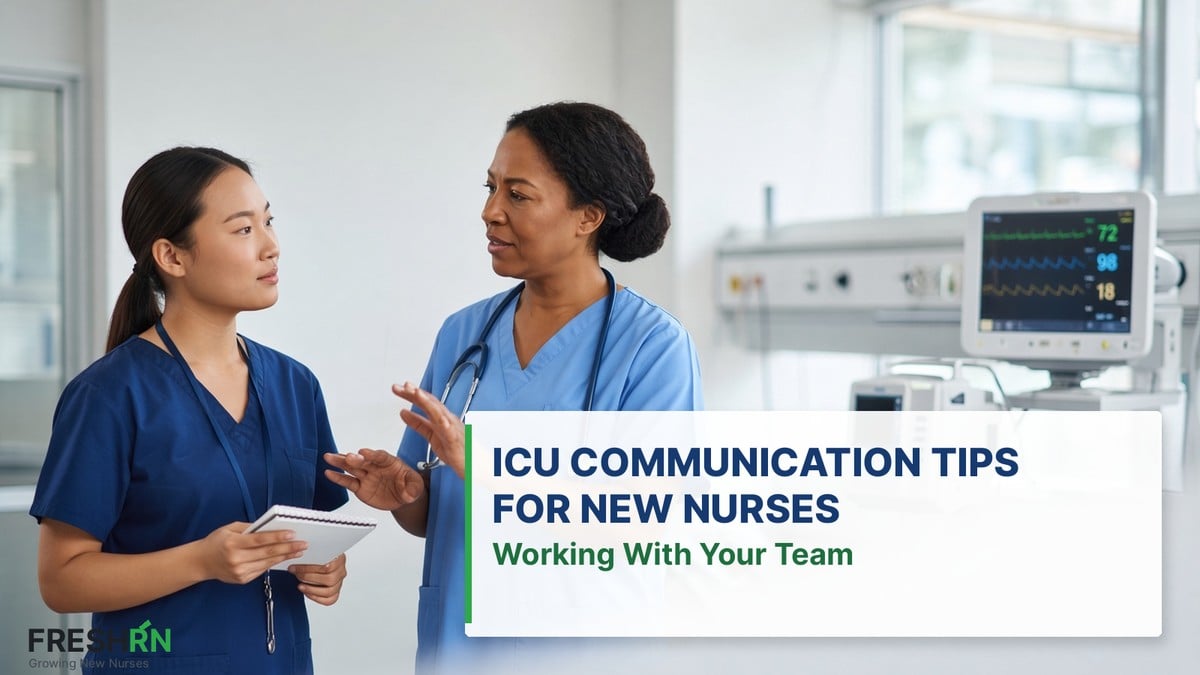
Practical ICU communication tips for new nurses: learn how to ask questions, speak up, and work with your team during your first months in critical care.
Continue Reading ICU Communication Tips for New Nurses: Working With Your Team

Cardiac nursing is very rewarding. Just when you think you’ve got it figured out, you’ll find something new. Let’s look at a Cardiac Nurse typical day.
Continue Reading Cardiac Nurse Responsibilities: A Typical Day on the Unit
This episode discusses neuro nurse tips with the main questions newbies to neuro have: if neuro changes are subtle, when do I worry? We also discuss common neuro disease processes including ischemic and hemorrhagic stroke, subarachnoid hemorrhage, intraventricular hemorrhage, and more.
Continue Reading Neuro Nursing Priorities for New Nurses: When to Worry
Wish Your 12-Hour Shift Had A Map?👇
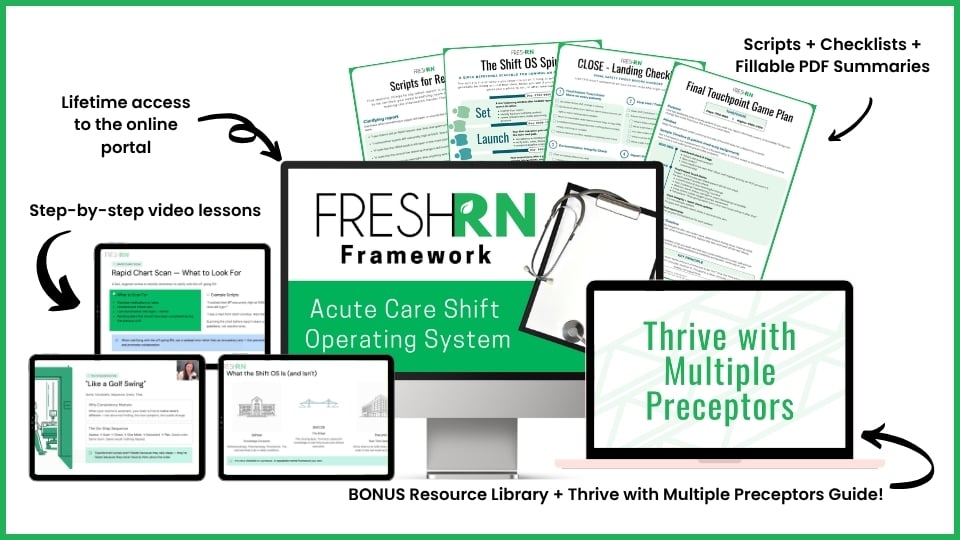
Turn a chaotic 12-hour acute care shift into a clear, structured rhythm. We cover: how to launch after report, prioritize when everything feels urgent, and finish with a clean handoff.
See What’s Inside Shift OS →

0 Comments