
Okay, let’s talk one of the most awkward-but-essential nursing skills you’ll ever need to master: delegation.
Delegation is more than knowing what to delegate
Nursing school did a great job of teaching us what to delegate. We learned all about scope of practice and what tasks can (and can’t) be safely delegated to a CNA, PCT, or other assistive personnel. We had test questions on this, and they drilled in the importance of following up to ensure the task was done.
But one thing nursing school didn’t teach us?
👉 How to actually delegate to another human being.
Delegating without sounding like a jerk
Delegation is a fancy word for assigning a task to someone else. (Or, to be blunt: telling someone to do something.) But if it’s not done with self-awareness and a tone of respect, it can come across as dismissive, insensitive, or tone-deaf. And when you’re new to the unit, that’s the last impression you want to make since we’re trying to build rapport with our new teammates, not make new enemies.
Over the years, I’ve heard from so many nurses who say delegation is one of the hardest soft skills to figure out. Here are a few real-world delegation tips that made a huge difference for me (and will hopefully do the same for you)!
✅ 1. Be direct, not demanding
Instead of tiptoeing or awkwardly phrasing it as a question, be confident and clear. Say what needs to be done in a professional, matter-of-fact way.
Example:
“Hey, when you get a minute, can you grab a set of vitals on bed 26? Thanks!”
✅ 2. Say thank you (a lot)
I say thank you 900 times a day. You truly cannot say it enough. Even for small tasks. Expressing gratitude builds trust and shows that you respect their role.
✅ 3. Educate when needed (don’t scold)
If a task wasn’t completed correctly or a red flag wasn’t escalated, ****or they just handled a situation wrong, I would focus on education rather than coming down on them.
Example:
“Hey, that BP was super high, just so you know, I’ve got a med for that. If it’s ever over 160 again, just grab me ASAP so I can get ahead of it. Thanks so much!”
✅ 4. Be a teammate, not a boss
Respect goes both ways. If I have time to something that my patient needs and my tech is busy, I don’t spend 20 minutes looking for them to go do something I’m perfectly capable of doing. Don’t make people feel like they’re just there to serve you.
✅ 5. Notify quickly when priorities shift
Nursing is dynamic, what felt important five minutes ago may suddenly take a backseat. If my prioritization has quickly changed and it affects my tech’s/teammates plan, I let them know right away because they might not pick up on my newfound urgency. I don’t assume that they know what I’m thinking; and doing so can put your patients at risk if you need things done ASAP.
Example:
“Hey, I know you were about to do the bed bath, but I need a fresh set of vitals on bed 20. He doesn’t look hot and I want to call the doc with updated numbers first. Appreciate you!”
✅ 6. Pay attention to their energy
If someone seems off, don’t ignore it. Address it with empathy.
Example:
“Hey, I noticed you’re not all here today, but our patients and myself need you to be. Are you doing okay? Life okay? You don’t have to tell me details, but I just want you to know I see you and I’m here if you need support.”
✅ 7. Put patient care first
Even if you’re frustrated, keep your focus on what the patient needs in the moment. You can address behavioral issues or attitude problems after the immediate need is met.
(These 7 tips are pulled from my full post on nursing delegation here!)
Bottom line: Delegate with confidence and compassion
Delegation is delicate. It’s an essential skill, but one that requires both clarity and emotional intelligence. You’ll get better at it with time, but starting with a few respectful, clear approaches will go a very long way in earning your teammates’ trust.
➡️ Remember: Great nurses don’t do it all alone. They collaborate, they communicate, and yes, they delegate. 💪
Do you have a delegation tip that helped you on the floor? Share it in the comments, let’s help each other get better!
Until next time,
Kati 🪴
🧰 More delegation + communication resources
- 📘 How to Master Nursing Delegation (Blog Post)
- My full breakdown of what delegation looks like in real life (with practical tips and relatable stories from the floor.)
- 🎓 Critical Thinking for Nurses (Online Course)
- Learn how to make quick, smart decisions, especially when delegating or prioritizing under pressure.
- 🎙️ Podcast Episode: Working With Providers (From the FreshRN Podcast)
- Understanding provider schedules and how to communicate effectively with doctors as a nurse.
- 💬 Related Vitals + Vibes Posts:

Don’t be intimidated! Follow these tips for working with physicians and banish your nursing anxiety for good.
Continue Reading Working With Physicians: 8 Tips Every New Nurse Should Know

People pleasing in nursing leads to perfectionism, burnout, and anxiety. Learn how to break the cycle and build a more confident, compassionate identity.
Continue Reading People Pleasing in Nursing: How Perfectionism Leads to Burnout

Wondering if your preceptor is just tough, or actually toxic? Here’s how to spot the red flags of bullying, protect your mental space, and navigate this tricky dynamic like a pro nurse (without losing your mind).
Continue Reading Is Your Preceptor a Bully? Here’s How to Tell and What to Do

If you have to write out goals for nursing evaluations during your performance review process, I go over a few great ideas and ways you can structure yours!
Continue Reading 32 Powerful Goals for Nursing Evaluations to Help You Succeed

Practical ICU communication tips for new nurses: learn how to ask questions, speak up, and work with your team during your first months in critical care.
Continue Reading ICU Communication Tips for New Nurses: Working With Your Team

Cardiac nursing is very rewarding. Just when you think you’ve got it figured out, you’ll find something new. Let’s look at a Cardiac Nurse typical day.
Continue Reading Cardiac Nurse Responsibilities: A Typical Day on the Unit
Wish Your 12-Hour Shift Had A Map?👇
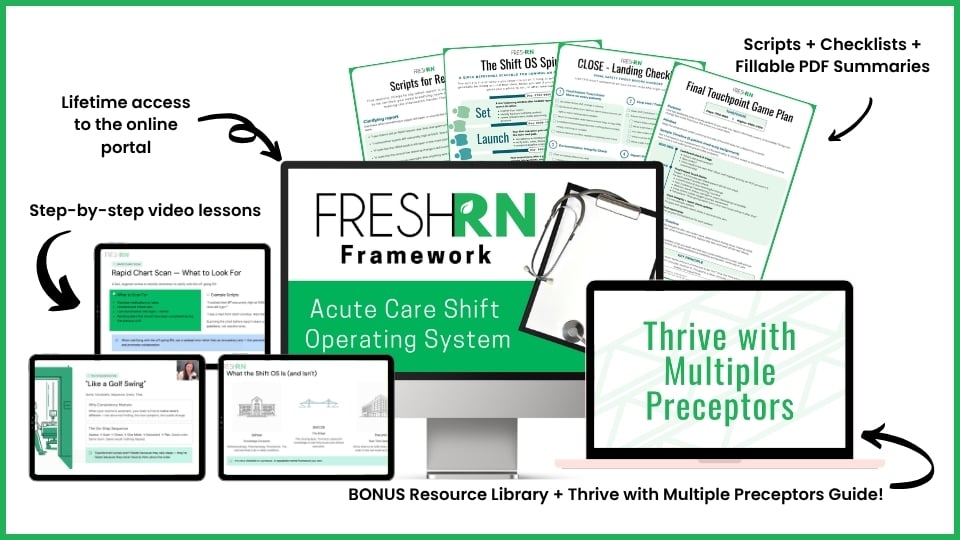
Turn a chaotic 12-hour acute care shift into a clear, structured rhythm. We cover: how to launch after report, prioritize when everything feels urgent, and finish with a clean handoff.
See What’s Inside Shift OS →

0 Comments