
If you’re an RN in Florida and starting to think about earning your BSN, you’re not alone. Many hospitals are moving toward hiring BSN-prepared nurses, and some even require it within a certain number of years after you start. But figuring out which RN to BSN programs in Florida make sense for your life, your budget, and your goals can feel overwhelming. Let’s break it down so you can make a confident choice.

Table of Contents
Why consider an RN to BSN program in Florida?
The BSN isn’t just about checking a box. Nurses with a BSN often have more opportunities for advancement into leadership, education, and specialty roles. Many graduate programs (like nurse practitioner or CRNA school) require a BSN as the entry point.
On a practical level, having a BSN can mean:
- Meeting hospital requirements for magnet status or career ladders
- More competitive pay scales in some organizations
- Smoother access to graduate-level education later on
If you’re planning to stay in Florida, completing a local RN to BSN program can also connect you with statewide networks and opportunities.
📚 RN to BSN programs in Florida: what to expect
While each school has its own quirks, most RN to BSN programs in Florida have a similar structure:
- Timeline: Typically 12–24 months, depending on full-time or part-time enrollment. Some programs advertise “as little as 9 months,” but that usually requires a heavy course load.
- Format: Many are fully online or hybrid, which makes it easier to work while finishing your degree.
- Cost: Tuition can range widely, from around $4,000 at public universities (especially if you qualify for in-state tuition) to $15,000+ at private schools.
Keep in mind that books, fees, and clinical requirements may add to your total investment.
Admission tips for Florida RN to BSN programs
Every school will have its own checklist, but here are the most common requirements you’ll see:
- A current, unencumbered RN license in Florida (or a compact license if you’re practicing in the state)
- An associate degree or diploma in nursing from an accredited program
- A minimum GPA (often 2.5-3, but accepted students usually are on the higher 3-4.0 end) on previous coursework
- Transcripts and proof of prerequisite courses (like statistics or pathophysiology, if not already completed)
💡 Pro tip: Apply early! Some programs operate on rolling admissions, and the earlier you submit, the more likely you’ll land your ideal start date.
🤔 How to choose the right program for you
This is where it gets personal. Ask yourself:
- Do I need maximum flexibility? Fully online programs may be your best bet.
- Am I worried about cost? Start by looking at Florida’s public universities and community college partnerships, they usually offer the most affordable tuition.
- Do I care about name recognition? Some larger universities may carry more weight with certain employers, though all accredited BSN programs meet the same standards.
At the end of the day, the “best” RN to BSN program in Florida is the one that aligns with your season of life, budget, and long-term career goals.
💡 Smart Strategy: How to Pay for Your Nursing Degree
The most financially responsible way to pay for nursing school is to prioritize the lowest-cost options first and borrow only what you need:
- Start with free money – Max out scholarships and grants from your school or external sources. These don’t need to be repaid and directly reduce your total cost.
- Use personal savings or family contributions – Whether it’s savings you’ve set aside or a gift from a relative, this keeps your debt down.
- Use federal student loans next – These typically offer lower interest rates and more flexible repayment options than private loans.
- Only use private loans if needed – Once all other options are exhausted, borrow privately for the remaining gap.
If you do need private loans, don’t accept the first rate you see. Services like Juno use group buying power to negotiate lower interest rates for students, sometimes cutting rates by 1–4%. Signing up is free and doesn’t lock you into anything, but even a 1% difference can save you thousands over the life of your loan.
🎯 Bottom line: Minimize what you borrow, and make every dollar work smarter.
RN to BSN programs in Florida: a quick comparison
To help you compare your options, here’s a snapshot of some of the most popular RN to BSN programs in Florida (all data is approximate). This chart highlights tuition ranges, program length, and format so you can quickly see what might fit best with your life and career goals.
| School | Tuition (Approx.) | Program Length | Format | Notes |
|---|---|---|---|---|
| University of Florida (UF Online) | ~$13,000 | 12–15 months | Fully online | Nationally ranked, strong name recognition |
| University of Central Florida (UCF) | ~$6,900 (in-state) | 12–24 months | Online | One of the most affordable and popular options in Florida |
| Florida State University (FSU) | ~$9,000 (in-state) | 12 months | Online | Designed for working RNs, competitive admission |
| Florida International University (FIU) | ~$7,300 (in-state) | 3 semesters | Online | Known for strong community health focus |
| University of South Florida (USF) | ~$6,900 (in-state) | 12–16 months | Online | Flexible start dates, rolling admissions |
| Florida Atlantic University (FAU) | ~$5,700 (in-state) | 1 year (full-time) | Online | One of the lowest in-state tuition rates |
💡 Keep in mind: Tuition varies for in-state vs out-of-state students, and fees/books aren’t always included in published estimates. Always confirm current costs with the school’s financial aid office.
Not sure where to start or want to see your options in one place? Check out our free tool below that lets you compare nursing programs in your state. ⬇️
Final Thoughts on RN to BSN Programs in Florida
If you’re feeling a little overwhelmed by all the program options, tuition numbers, and timelines, take a breath. 😮💨 You’re not behind, and there’s no one “perfect” RN to BSN program in Florida.
Some nurses dive straight into a BSN right after their ADN, while others wait until they’re settled into their first RN role and ready to take on more. If you’re eager to advance quickly, an accelerated RN to BSN program in Florida could help you reach your goal in less than a year.
All those paths are valid. What matters most is choosing a program that fits your life right now and positions you for where you want to go next. And remember: a degree is a tool, not a measure of your worth. If a BSN feels like the right next step, move forward with intention and give yourself grace in the process. 🌱
🧰 More Resources
- 📋 Want to keep track of application deadlines? Download our FREE Nursing School Planner to stay organized and focused.
- 💰 Worried about tuition? Tools like Juno can help you secure lower student loan interest rates by pooling borrowers together (it’s free and could save you thousands). Check it out here.
- Best RN Schools in Florida: Your Guide to Top Nursing Programs in the Sunshine State
- How to Find NCLEX Pass Rates of Nursing Schools: A Simple Step-by-Step Guide
- The Ultimate Guide to Online Nursing Degree Programs: Flexible Options for Every Nurse
Don’t be intimidated! Follow these tips for working with physicians and banish your nursing anxiety for good.
Continue Reading Working With Physicians: 8 Tips Every New Nurse Should Know
People pleasing in nursing leads to perfectionism, burnout, and anxiety. Learn how to break the cycle and build a more confident, compassionate identity.
Continue Reading People Pleasing in Nursing: How Perfectionism Leads to Burnout
Wondering if your preceptor is just tough, or actually toxic? Here’s how to spot the red flags of bullying, protect your mental space, and navigate this tricky dynamic like a pro nurse (without losing your mind).
Continue Reading Is Your Preceptor a Bully? Here’s How to Tell and What to Do
If you have to write out goals for nursing evaluations during your performance review process, I go over a few great ideas and ways you can structure yours!
Continue Reading 32 Powerful Goals for Nursing Evaluations to Help You Succeed
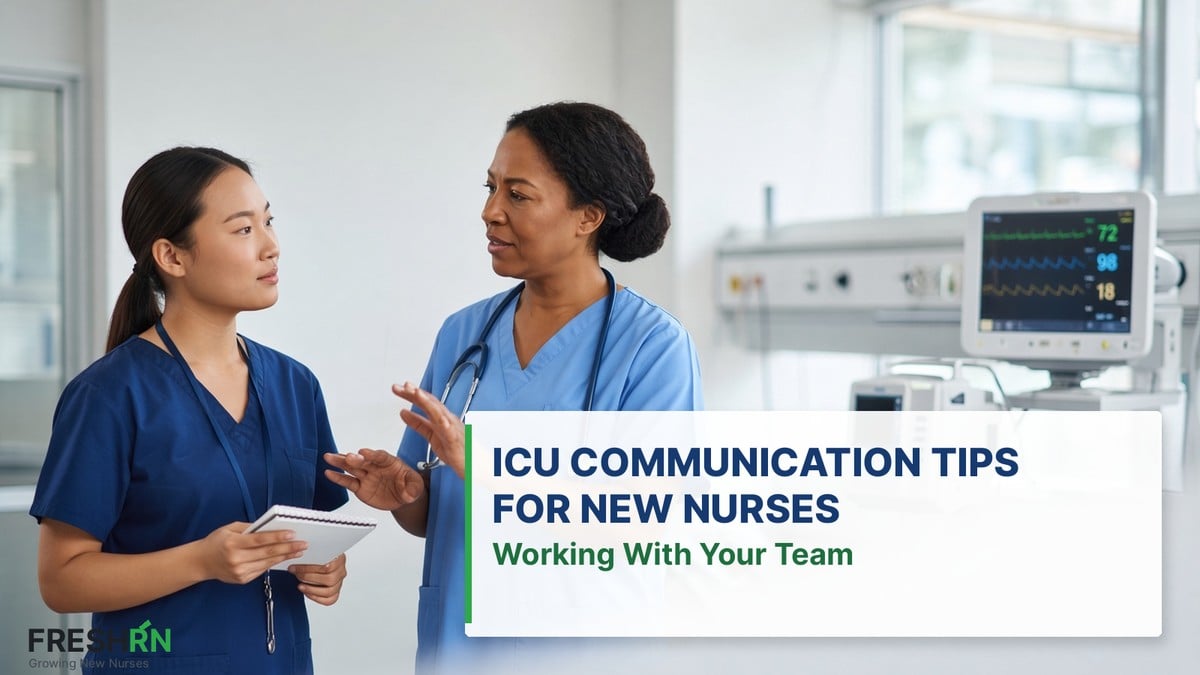
Practical ICU communication tips for new nurses: learn how to ask questions, speak up, and work with your team during your first months in critical care.
Continue Reading ICU Communication Tips for New Nurses: Working With Your Team

Cardiac nursing is very rewarding. Just when you think you’ve got it figured out, you’ll find something new. Let’s look at a Cardiac Nurse typical day.
Continue Reading Cardiac Nurse Responsibilities: A Typical Day on the Unit
0 Comments